Ear, Nose and Throat · Head and Neck Surgery
A nose that breathes and belongs to the face.
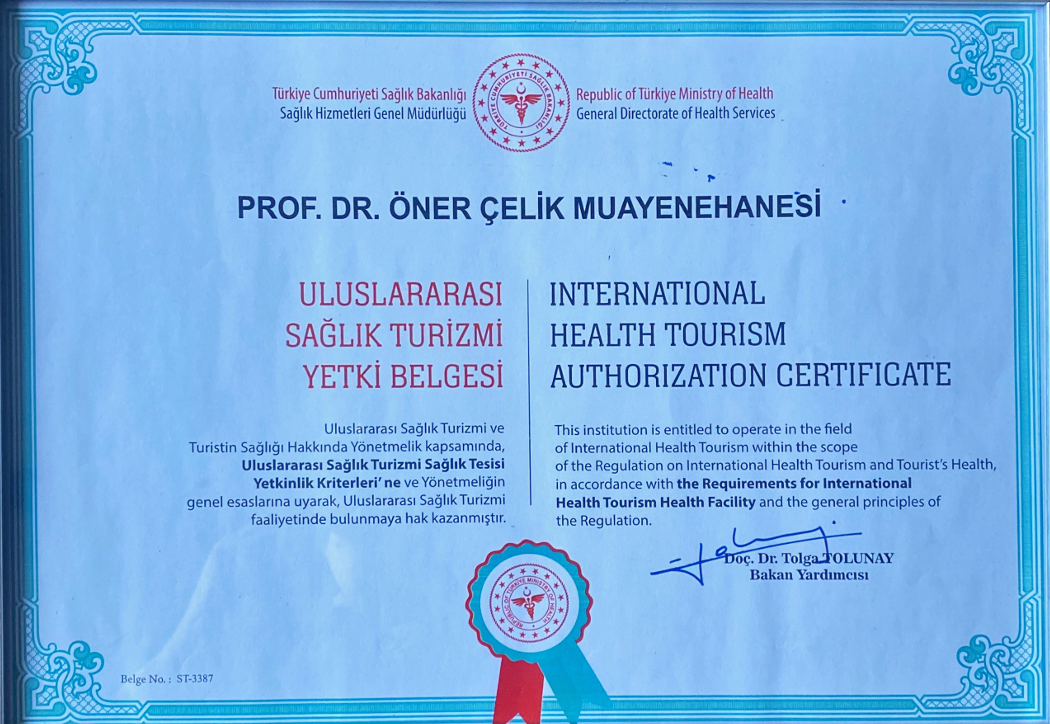
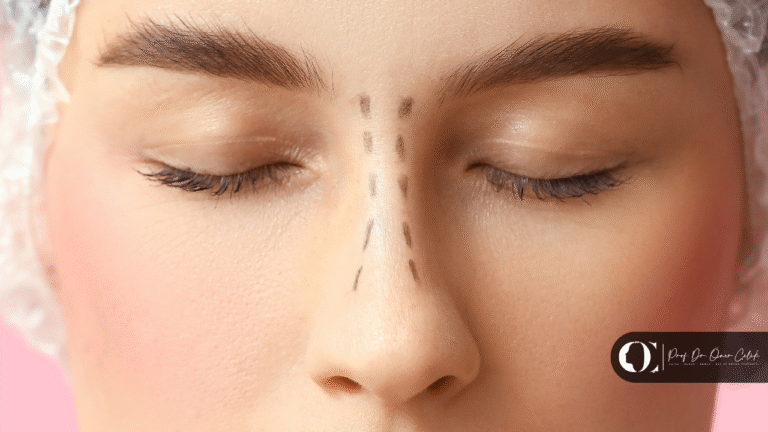
The outer shape of the nose and the airway are assessed in the same consultation. With anatomical knowledge from head and neck surgery, both can be planned within the same operation where needed.
Message on WhatsApp Request a consultation
Consultations in Suadiye, Istanbul · Surgery at Maltepe University Hospital
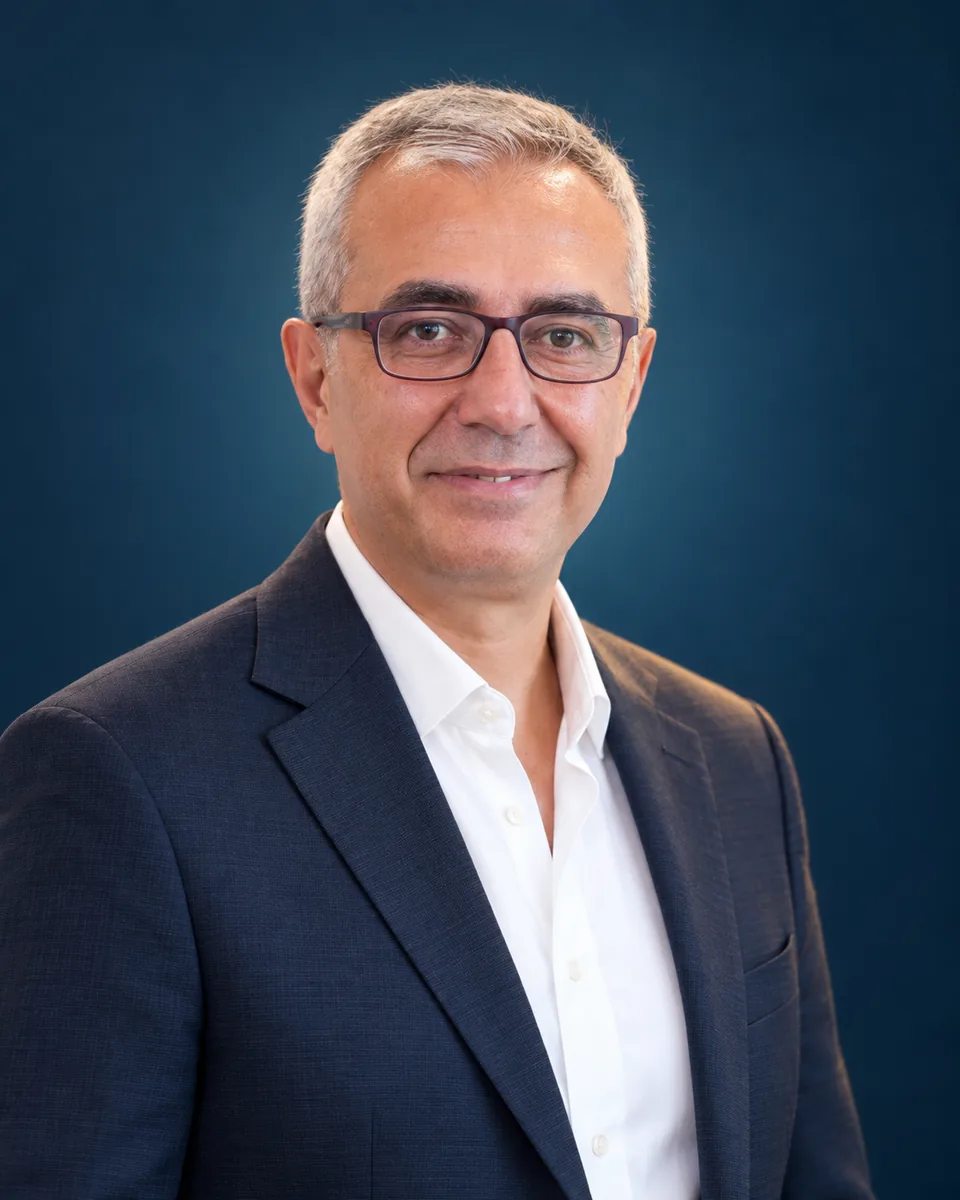
- TitleProfessor of Otorhinolaryngology – Head and Neck Surgery
- European BoardCertified in ORL-HNS (2016)
- Academic backgroundMaltepe University Faculty of Medicine (2009–2024)
- ClinicSuadiye, Kadıköy · Asian side of Istanbul
Seen and unseen
Which area is the concern?
Choose one to see on the drawing which part of the nose is assessed. Your choice is added to your WhatsApp message only as a short code.
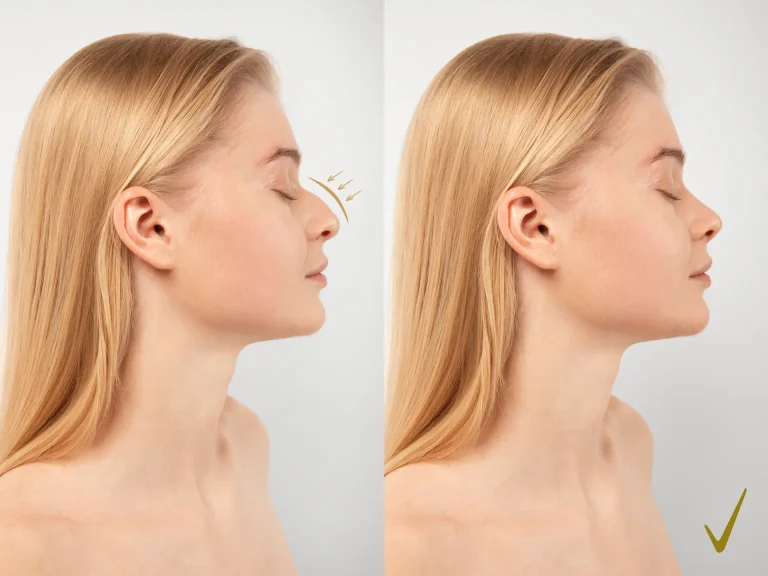
Dorsal hump
A hump is the bony and cartilaginous projection on the bridge of the nose. At the consultation the profile line is assessed together with the forehead, lips and chin; how much to correct is planned around that balance.
Treatments
From the nose to the neck.
Rhinoplasty
-
Rhinoplasty
The outer shape is planned around facial proportions; the airway is assessed in the same consultation.
Learn more -
Revision rhinoplasty
Shape or breathing problems after previous surgery; cartilage may be needed for support.
Learn more -
Piezo rhinoplasty
Bone is shaped with ultrasonic instruments; which noses it suits is decided at the consultation.
Learn more -
Male rhinoplasty
The aim is a straight, strong profile line that keeps the character of the face.
Learn more -
Thick-skinned nose
In thick skin the cartilage support is reinforced; swelling may take longer to settle.
Learn more -
Saddle nose
A collapsed bridge is supported again with cartilage grafts.
Learn more -
Closed rhinoplasty
A technique with the incisions inside the nose; whether it suits a nose is decided at the consultation.
Learn more
Breathing and sinuses
-
Deviated septum (septoplasty)
A deviated septum can narrow the airway; it can be corrected without changing the outer shape.
Learn more -
Turbinate reduction
Enlarged turbinates are reduced to widen the airway.
Learn more -
Nasal valve surgery
A side wall of the nose that collapses inwards on breathing in is given support.
Learn more -
Endoscopic sinus surgery
In chronic sinusitis and polyps the sinus openings are widened endoscopically, with no external incision.
Learn more -
Snoring surgery
The source of snoring is looked for in the nose, palate or tongue base; treatment is planned accordingly.
Learn more -
Sinonasal tumour surgery
Masses inside the nose and sinuses are mostly removed endoscopically.
Learn more
Head and neck
-
Parotid and salivary gland tumours
For masses in the parotid gland in front of the ear and the glands under the jaw, surgery is planned with the facial nerve monitored.
Learn more -
Thyroid cancer
In thyroid cancer the surgical plan is based on examination of the neck and imaging.
Learn more -
Laryngeal tumours
With persistent hoarseness the larynx is examined endoscopically; treatment is chosen according to the stage.
Learn more -
Oral cavity, lip and tongue tumours
A sore or lump lasting more than two weeks should be examined; treatment depends on the stage.
Learn more -
Carotid body tumour
A mostly benign tumour that develops where the carotid artery divides in the neck.
Learn more
Ear
-
Stapes surgery (stapedotomy)
In otosclerosis the function of the fixed stapes bone is restored with a small prosthesis.
Learn more -
Tympanoplasty
A perforated eardrum is repaired; the aim is a dry ear and preserved hearing.
Learn more -
Otoplasty
The angle and folds of a prominent ear are reshaped.
Learn more
Paediatric ENT
-
Tonsillectomy
Considered for frequently recurring tonsillitis or breathing problems during sleep.
Learn more -
Adenoidectomy
With mouth breathing, snoring and recurrent ear problems, the adenoids are examined.
Learn more -
Middle ear infection
For recurrent or persistent middle ear infection, the treatment options are assessed.
Learn more
Beyond the nose
Head and neck, and ear surgery.
The anatomical knowledge behind rhinoplasty comes from head and neck and ear surgery. In both areas, consultation, surgery and follow-up stay with the same surgeon.
-
Head and neck
Parotid and salivary gland surgery
Most salivary gland masses arise in the parotid gland in front of the ear, and most are benign. Because the facial nerve runs through the gland, the operation is planned with the nerve monitored.
When is it assessed?
- A slowly growing swelling in front of the ear or at the angle of the jaw
- A firm lump felt under the jaw
- Assessment with ultrasound and, if needed, fine-needle biopsy
-
Ear
Stapes surgery (stapedotomy)
In otosclerosis the stapes bone in the middle ear becomes fixed and sound is not passed on well to the inner ear. In stapedotomy its function is restored with a small prosthesis.
When is it assessed?
- The eardrum is intact, but hearing has declined over the years
- Similar hearing loss in the family
- Assessment with hearing tests and tympanometry
Physician
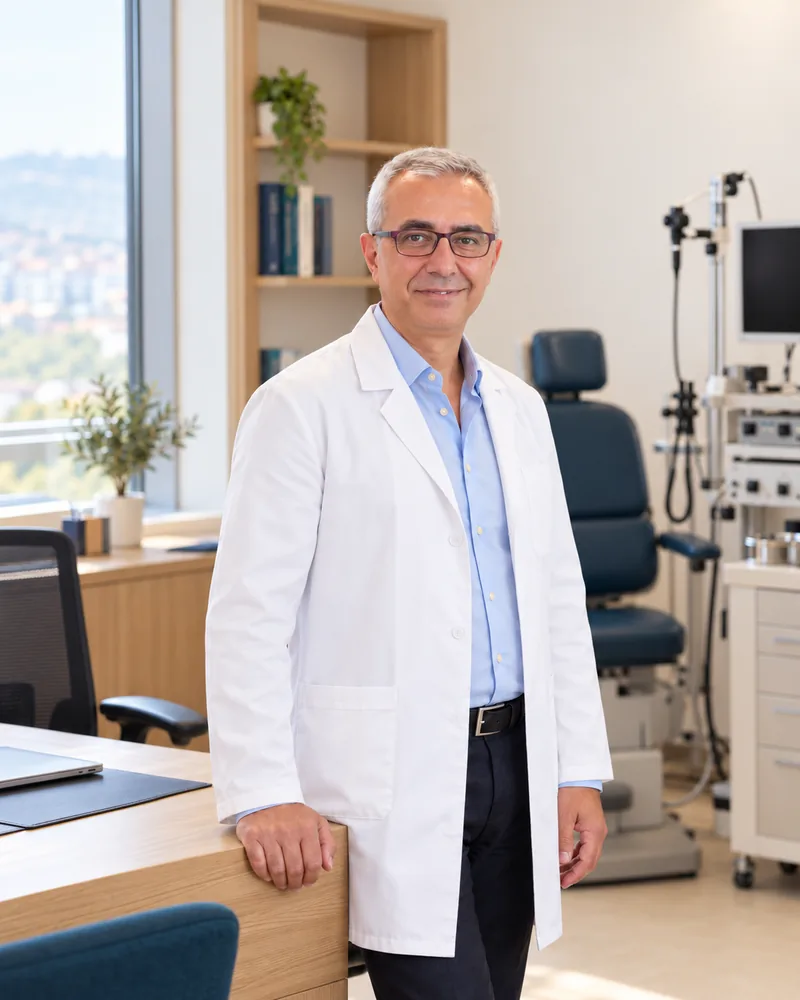
Prof. Dr. Öner Çelik
Professor of Otorhinolaryngology – Head and Neck Surgery. He approaches rhinoplasty with anatomical knowledge from head and neck surgery: the outer shape and the airway are part of the same plan.
- Education
- Istanbul University, Istanbul Faculty of Medicine (1999) · ENT specialisation (2004)
- Academic
- Maltepe University Faculty of Medicine, Department of ENT, 2009–2024 · Professor (2020)
- European Board
- European Board Certification in ORL-HNS, Vienna (2016)
- International
- The Ohio State University Wexner Medical Center (2013)
- Memberships
- Turkish Medical Association · Turkish Foundation of Otorhinolaryngology Head and Neck Surgery · Turkish Society of Otorhinolaryngology Head and Neck Surgery
From academic work
- Concurrent medullary and papillary carcinoma of thyroid Ateşpare A, Çalış AB, Çelik Ö, Yener N, Vural Ç · Kulak Burun Bogaz Ihtis Derg · 2015 Publication record
- Conservative costal cartilage harvest for revision septorhinoplasty Boyacı Z, Çelik Ö, Ateşpare A, Koca Ö · J Craniofac Surg · 2013 Publication record
- Septorhinoplasty with spreader grafts enhances perceived voice quality without affecting acoustic characteristics Çelik Ö, Boyacı Z, Yelken K, Ateşpare A, Çelebi Ş, Koca Ö · J Voice · 2012 Publication record
The process
From consultation to the first year.
- Consultation
Assessment
The inside of the nose is examined with an endoscope; facial proportions and your expectations are discussed.
- Planning
A personal plan
Which structures are to be corrected and to what extent, the risks and the recovery timeline are set out.
- Day of surgery
Maltepe University Hospital
Performed under general anaesthesia; most patients stay one night in hospital.
- Week 1
Splint removed
Bruising and swelling start to ease; most daily activities can be resumed.
- Month 1
Check-up
Light exercise can be resumed; swelling persists, especially at the tip.
- Year 1
Final shape
Swelling settles and the nose takes its final shape; an annual check-up follows.
Timings are averages for rhinoplasty; recovery differs from patient to patient.
Frequently asked
Common questions.
All questionsDoes a hole in the eardrum close on its own?
Some perforations close on their own. Tympanoplasty is performed for perforations that have not closed within three months or that cause hearing loss or recurrent ear discharge. The operation takes about 2 hours under general anaesthesia; the graft is usually taken from the patient’s own tissue layer behind the ear.More detail: Tympanoplasty.
From what age can rhinoplasty be done?
Rhinoplasty requires the nose to have finished growing; this is usually after about 16–17 in women and 18 in men. Alongside age, general health and realistic expectations of the operation are also assessed.More detail: Rhinoplasty in Istanbul.
How is a deviated septum operation performed?
Septoplasty corrects a deviation of the central wall that divides the two sides of the nose. It is done under general anaesthesia, mostly from inside the nose, and takes about 30 minutes on average; you go home the same day or the next day. The packs inside the nose are removed a few days later, and most people return to work after about a week.More detail: Septoplasty.
Is a thyroid nodule cancer?
Most thyroid nodules are benign; thyroid cancer is found in a small proportion. The diagnosis is made with ultrasound and fine-needle biopsy. Thyroid cancer usually progresses slowly; treatment is planned according to the type and stage, and the main treatment is surgical removal of part or all of the thyroid gland.More detail: Thyroid nodules and thyroid cancer.
When is a tonsillectomy needed?
It is performed for frequently recurring or chronic tonsillitis, snoring, sleep apnoea or tonsils large enough to make swallowing difficult. It takes about 30 minutes under general anaesthesia and children usually go home the same day; they usually return to school after 10 days.More detail: Tonsillectomy.
Blog
Latest articles.

Appointment
Consultations in Istanbul.
Leave your details and we will call you to arrange the consultation date and preparation. If you prefer to message straight away, our WhatsApp line is open.
- Send the form or message us on WhatsApp
- A suitable consultation date is agreed together
- The consultation takes place at the clinic in Suadiye, Istanbul
Message on WhatsApp Call · +90 533 622 91 60
Practice
Suadiye, Kazım Özalp Sk. Cumhuriyet Apt. No:38 Kat:6 D:12
34740 Kadıköy / İstanbul, Türkiye
+90 501 054 60 23
+90 533 622 91 60
info@dronercelik.com
Directions
Suadiye, Kazım Özalp Sk. Cumhuriyet Apt. No:38 Kat:6 D:12
34740 Kadıköy / İstanbul, Türkiye
+90 501 054 60 23
+90 533 622 91 60
info@dronercelik.com
Directions