

What Is Open Rhinoplasty? Advantages and the Process from a Surgeon’s Perspective
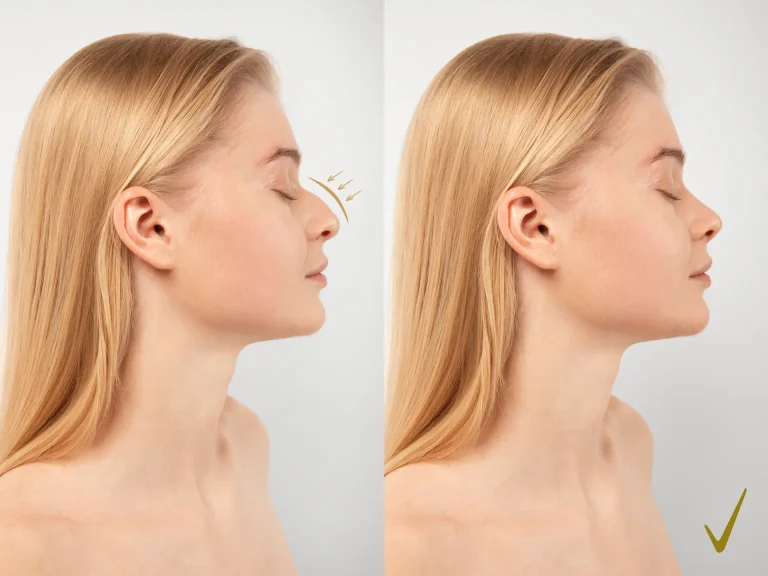
The nose sits in the very centre of the face and plays a part in facial expression, appearance and, of course, breathing. Some people consider surgery because of a dorsal hump, some because of breathing difficulties and some because of a drooping tip. Anyone who starts researching rhinoplasty usually reaches the same fork in the road early on: open or closed?
As a specialist in Ear, Nose and Throat and Head and Neck Surgery, I would like to explain the open rhinoplasty technique transparently, with its advantages and its drawbacks. The aim is not to overwhelm you with medical terms, but to show the process from a surgeon’s point of view and help you understand how the choice of technique is made.
“Rhinoplasty is not only the art of shaping; it is also engineering based on millimetre-level calculations. The open technique allows us to carry out this engineering down to the finest detail.”

What Exactly Is Open Rhinoplasty?
There is sometimes a misconception: the word “open” can conjure up a frightening image of the whole nose being opened. In reality, it is nothing like that dramatic.
Open rhinoplasty is performed through a very small incision (usually in an inverted V shape) on the strip of skin that separates the nostrils, called the columella. Through this small incision, the nasal skin is gently lifted.
You can think of it like this: imagine repairing a car engine. With the closed technique, you try to work through the grille without opening the bonnet, relying largely on feel. With the open technique, you lift the bonnet. You can see the whole engine – that is, the cartilage and bone framework of the nose – clearly, and analyse precisely where each part sits and where a deviation originates.
Why Do Surgeons Choose the Open Technique?
There are sound reasons why I and many colleagues prefer the open technique, especially in complex cases. In surgery, visibility (exposure) is key.
-
Full control: Being able to see the tip cartilages directly is a great advantage when correcting asymmetry.
-
Precise suturing: When reshaping the cartilages, we can make sure each suture sits exactly where it should.
-
Revision cases: In noses that have been operated on before, the tissues are often scarred together. The open technique is practically essential for releasing these adhesions safely.
Open vs Closed Rhinoplasty: What Is the Difference?
Asking which one is “better” is like asking which car is better: the answer depends on the need. To clear up the confusion many patients have, here is an honest comparison.
In the closed technique, all incisions are inside the nose and there is no visible external scar – a real advantage – but the field of view is limited. In the open technique, a very small scar remains on the columella (and it usually fades over time), while the surgeon has much greater room to manoeuvre.
“Accepting a tiny scar for the intended result is often a small price to pay for symmetry and functional success.”
If there is significant asymmetry, a marked deviation or problems with the nasal tip, the open technique allows the problem to be addressed at its source. If only a simple hump needs to be removed, the closed technique may also be chosen. What decides is the anatomy of the nose and the surgical plan.
When Is Open Rhinoplasty Considered?
Not every patient needs the open technique, but in the following situations the balance often tips in its favour:
-
Nasal tip problems: The open technique is widely used to shape tips that are droopy, wide, asymmetric or “boxy”.
-
Secondary (revision) surgery: A wide field of view is needed to repair noses whose anatomy has been altered by previous surgery.
-
Significant cartilage deviations: In difficult septal deviations that block breathing, cartilage grafts may need to be placed. With the open technique, these grafts can be sutured with millimetre precision.
-
Patients with thick skin: Thick skin does not show the framework underneath, so the framework needs to be built more clearly and more strongly. This can often be achieved in a more controlled way with the open technique.
The Operation Step by Step
Patients often ask, “What happens after I fall asleep?” Let’s make that process transparent.
1. Preparation and anaesthesia: Operations are performed in a fully equipped hospital under general anaesthesia, so you are in a deep sleep and feel no pain.
2. The key incision: The small incision is made on the skin between the nostrils (the columella). The nasal skin is then separated from the cartilage and bone framework. This is the moment the anatomical map of the nose lies open in front of us.
3. Shaping (the sculpting stage): If there is a hump, it is rasped or cut with ultrasonic instruments (piezo). The tip cartilages are refined, repositioned and fixed in their new form with special sutures. If there is a breathing problem, deviations of the bone and cartilage inside the nose are corrected in the same session.
4. Closure: Once the work is complete, the skin is redraped and closed with fine sutures. Soft silicone splints are usually placed inside the nose (instead of traditional packing – you can still breathe through them) and a protective splint on the outside.
Recovery: Myths and Facts
You may have heard that “recovery after open surgery is very hard and there is a lot of swelling”. This is partly an exaggeration.
With advances in technology and methods such as piezo (ultrasonic bone shaping), extensive bruising lasting for weeks has become less common. Of course, as with any surgery, there will be a period of swelling.
-
First 3 days: Swelling is at its peak. Keeping your head elevated and applying cold compresses improves comfort.
-
Week 1: The splint and silicone splints are removed. This is your first look at the nose after surgery. It will still be swollen, but you will notice the change.
-
What about the small scar? The columella sutures are usually removed on day 7. The scar may look slightly pink at first and fades over the following weeks. After 6 months to a year it usually becomes very hard to notice with the naked eye.
“Recovery is not a sprint but a marathon. Patience is the most important medicine in this process.”
The Advantages of Open Rhinoplasty in Brief
Here is a summary of why I often use this technique as a specialist:
-
Visibility: It helps reduce the margin of error.
-
Symmetry: It is easier to match both sides.
-
Function: Providing structural support while opening the airway is more reliable.
-
Training: Modern rhinoplasty is largely built on this technique, and it lends itself well to technological innovations such as piezo.
Frequently Asked Questions
Here are the questions patients ask me most often in clinic.
1. Is there loss of sensation in the nasal tip after open rhinoplasty? Because the skin is lifted during surgery, temporary numbness is very normal. It is not permanent; as the nerve endings heal, sensation usually returns fully within 3–6 months.
2. Will the scar bother me? The incision lies on the underside of the nose, in an area that sits in shadow. With fine suturing techniques and appropriate scar care, it usually blends with the skin tone over time and becomes barely noticeable at a normal social distance.
3. Does the open technique take longer? Yes, the operation may take somewhat longer than the closed technique (on average 2–3 hours). This time reflects the attention given to detail during surgery.
4. Will my nasal tip droop over time? In the open technique, the tip is supported with what is called “structural grafting”, rather like a column-and-beam system. This support increases the tip’s resistance to gravity and reduces the tendency to droop.
Conclusion: How Is the Decision Made?
Rhinoplasty is an important decision. Techniques – open or closed – are only tools. What matters is that the choice of technique is based on the anatomy of the nose, breathing function and realistic goals.
If the aim is to correct a nasal deformity both aesthetically and functionally, open rhinoplasty is not a method to fear but a well-established option. My priority is not the name of the technique but a natural, healthy result that suits the face.
Which technique is suitable for a particular nose is decided individually, based on facial structure, nasal anatomy and expectations.
I wish you healthy days and easy breathing.
Results of any surgical or interventional procedure vary from person to person. You are advised to obtain a detailed opinion from your doctor before any procedure.
References
- Ishii LE et al. Clinical Practice Guideline: Improving Nasal Form and Function after Rhinoplasty. Otolaryngol Head Neck Surg, 2017. pubmed.ncbi.nlm.nih.gov
This content is for information only and does not replace medical advice. Every medical procedure requires an individual assessment and may carry risks. Results vary from person to person.