

What is revision rhinoplasty (secondary rhinoplasty)?
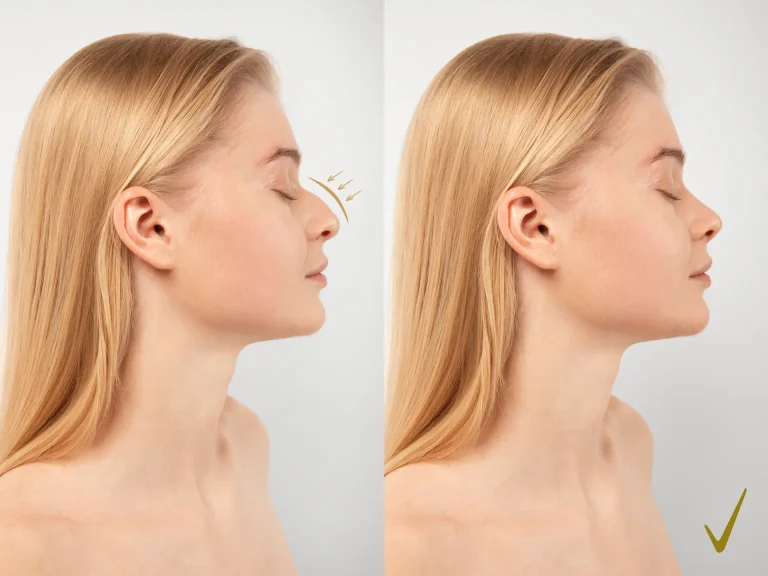
Revision rhinoplasty is a second (or sometimes third) corrective operation for a patient who has already had rhinoplasty, when the intended aesthetic or functional result was not achieved. It needs much more detailed planning than a first operation, because the tissues of the nose have already been operated on, the cartilage framework may be weakened and the internal structure has changed.
That is why revision surgery calls for a detailed knowledge of nasal anatomy and of functional nasal surgery as well as aesthetic surgery.
Why is revision rhinoplasty performed?
The reasons differ from person to person; the most common are:
Aesthetic problems
- A tip that was not lifted enough
- An over-rotated tip that looks artificial
- A dip or collapse along the bridge of the nose
- A hump that was not fully corrected
- Asymmetric sides of the nose
- An over-narrowed tip
- Irregular shape of the nostrils
Functional problems
- Difficulty breathing after surgery
- A deviated septum that was not fully corrected
- Internal or external nasal valve weakness
- Collapse of the middle part of the nose (middle vault collapse)
Some patients who were happy with their first operation may seek revision later because the tip has dropped over time.
Why is revision more difficult than a first rhinoplasty?
Because the tissues are no longer in their natural, untouched state:
- Cartilage may have been removed or weakened
- There is more scar tissue
- The internal anatomy of the nose has changed
- The supporting structures are weaker
- Additional cartilage may be needed to rebuild the shape
Revision surgery therefore requires advanced technique, patience, millimetre precision and an assessment of the whole face. General information about the operation is on the rhinoplasty page.
Where does the cartilage come from?
In revision surgery, the cartilage left inside the nose may not be enough. In that case additional support can be taken from:
- Ear cartilage
- Rib cartilage
Rib cartilage is usually preferred in more advanced cases, where it allows the nose to be rebuilt with a strong framework.
When should revision rhinoplasty be done?
After the first operation, the nose takes 6–12 months to settle fully. It is therefore recommended to wait at least 6 months, and ideally 12 months, before revision.
If there is a functional problem, earlier surgery may be considered in some cases.
Who is revision surgery not suitable for?
Revision is not suitable for every patient. It may not be advisable when:
- The skin is very thick
- Very little usable cartilage is left
- Not enough time has passed for healing
- Expectations are not realistic
- The wish for surgery stems from perfectionism rather than a specific problem
This is why the consultation is the most important step in the decision.
How is revision rhinoplasty performed?
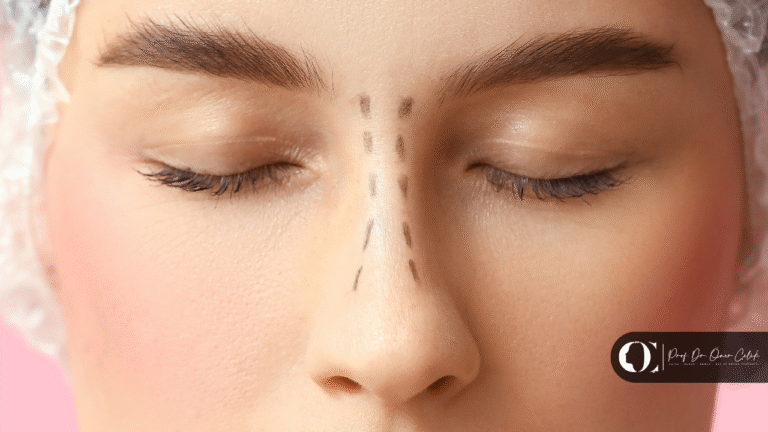
Consultation and analysis
- The inside of the nose is examined in detail
- The changes made by the previous operation are assessed
- Photographs are taken for planning
- The amount of cartilage needed is estimated
Surgical planning
If there is a functional problem, it is corrected at the same time. The aim is not only to improve the appearance but also to make the nose strong and functional again.
The operation
The open technique is usually preferred because it gives the surgeon a much wider view.
Recovery
Recovery after revision surgery is somewhat slower and needs more patience than after a first rhinoplasty.
- Swelling can last 3–6 months
- The nose can take 12–18 months to reach its final shape
What affects the result?
The result depends on:
- The surgeon’s experience with revision surgery
- The patient’s tissue characteristics
- The condition of the cartilage
- The effects of the previous operation
- The thickness of the skin
The right technique and detailed planning are the main factors; even so, the result varies from person to person.
Revision rhinoplasty as reconstruction
Revision rhinoplasty is more than a corrective operation; it is a process of rebuilding. The aim is a balanced and natural result, both aesthetically and functionally. Setting expectations correctly and being patient are the foundations of this process.
If you are unhappy with how your nose looks after a previous operation, or have breathing problems, a detailed assessment with Prof. Dr. Öner Çelik can clarify your options. How consultations and surgery are organised for patients travelling to Istanbul is explained on the your treatment in Istanbul page.
References
- Ishii LE et al. Clinical Practice Guideline: Improving Nasal Form and Function after Rhinoplasty. Otolaryngol Head Neck Surg, 2017. pubmed.ncbi.nlm.nih.gov
- Wee JH et al. Complications associated with autologous rib cartilage use in rhinoplasty: a meta-analysis. JAMA Facial Plast Surg, 2015. pubmed.ncbi.nlm.nih.gov
This content is for information only and does not replace medical advice. Every medical procedure requires an individual assessment and may carry risks. Results vary from person to person.