

What Is Septorhinoplasty? Healthy Breathing and Nasal Shape in One Operation
Many people who come to the ENT clinic describe two concerns at once. For some, breathing comes first: they cannot sleep well at night, their mouth gets dry, they snore, and they wonder whether the hump on the nose could be corrected in the same operation. For others it is the opposite: they are unhappy with the shape of the nose, but one side is also always blocked.
The medical answer to this “two birds with one stone” request is septorhinoplasty. If the shape of the nose and a constant feeling of not getting enough air are both issues, this article is for you.
As an ear, nose and throat and head and neck surgeon, I will explain this combined operation, a particularly rewarding area of surgery, openly and with all the facts.

What Exactly Is Septorhinoplasty? (Breaking Down the Name)
Medical terms can be confusing, so let us split this word in two:
-
Septoplasty: correcting a bend (deviation) in the wall inside the nose, the “septum”, which separates the two nostrils. This is the functional part.
-
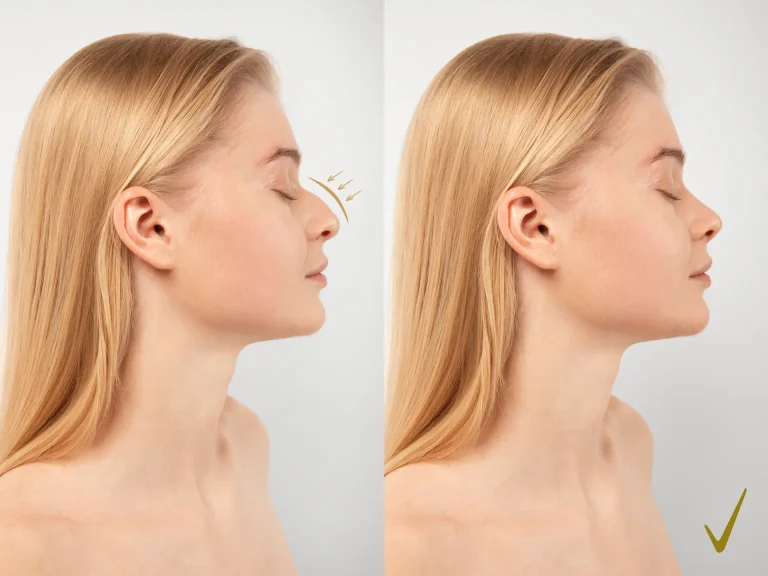
Rhinoplasty: changing the outer structure and shape of the nose. This is the aesthetic part.
Septorhinoplasty means performing both procedures under the same anaesthetic, in the same session and usually through the same incisions.
Think of it as renovating a house: you repaint the façade and replace the windows (rhinoplasty), but at the same time you repair the blocked water pipes and crooked walls inside (septoplasty). If you only paint the outside, the house looks nice but is uncomfortable to live in. If you only fix the pipes, it is comfortable but still looks old from the outside. Septorhinoplasty renovates the house from top to bottom.
Why Combine the Two?
As a surgeon, my usual advice is this: if you have both a breathing problem and an aesthetic concern, trying to solve them with separate operations is exhausting.
-
One anaesthetic, one recovery: instead of having general anaesthesia twice and going through the first week of recovery twice, everything is done at once.
-
Using “spare parts”: when we straighten the bent cartilage inside the nose (the septum), the pieces we remove are extremely valuable. We do not discard them; we use them as “grafts” to shape the tip of the nose or support collapsed areas. In other words, the problem itself becomes the material for the solution.
Who Is a Candidate for Septorhinoplasty?
Candidates are not only people who are unhappy with the shape of their nose, but also those whose quality of life is affected. If several of the following apply to you, this operation may be worth discussing:
-
Chronic nasal blockage: one or both sides of the nose stay blocked no matter how much spray you use.
-
Septal deviation: a doctor has previously told you that the septum is bent.
-
Mouth breathing during sleep and snoring: you wake up with a dry throat and feel tired in the morning.
-
Post-traumatic deformity: a past blow to the nose may have changed its outer shape and narrowed the airways inside.
-
Aesthetic concerns: for example a dorsal hump, a drooping tip or a wide nasal structure.
“Breathing is living. But breathing well is living well. Septorhinoplasty aims not only at a balanced profile but also at better sleep and a more energetic life.”
The Operation: What Happens in Theatre?
Planning this operation is more detailed than planning a purely aesthetic rhinoplasty, because airflow dynamics come into play.
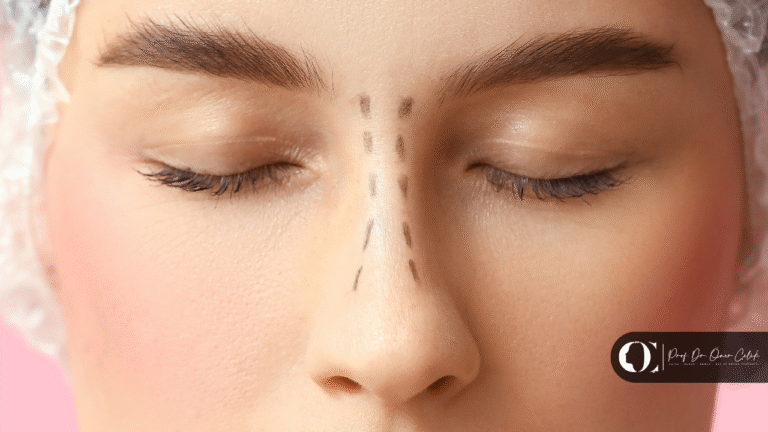
1. Analysis and planning: first we look inside the nose with endoscopic cameras to find the real cause of the blockage. Where is the deviation? Are the turbinates swollen? Is the valve area (the breathing angle) narrow? Then we carry out the external aesthetic analysis.
2. Surgical approach: the operation is usually performed under general anaesthesia. An open or closed technique may be used; this is decided according to the structure of your nose.
-
First we correct the inside: the bent septum is brought to the midline, and bony spurs blocking the airway are removed.
-
Then we shape the outside: the hump is removed, and the tip is lifted and refined.
-
Turbinates, if needed: turbinates enlarged by allergy or structure are reduced with radiofrequency technology.
3. Finishing: silicone splints that keep the airway open are placed inside, a protective splint is placed outside, and the procedure is complete.
What to Expect During Recovery
Recovery after septorhinoplasty is not very different from recovery after rhinoplasty alone. However, because work is also done “inside”, some points need attention.
-
First 48 hours: a slight feeling of fullness inside the nose and some oozing are possible. This is a result of the “renovation” inside.
-
Breathing: thanks to the silicone splints, you can breathe through the nose straight after surgery. However, because the tissues are swollen, it can take 3–4 weeks to reach full breathing comfort. Be patient: the nose opens up as the swelling goes down.
-
Nasal rinsing: this is the most important part of aftercare. Rinsing the nose with the seawater solutions or sprays we give you speeds up healing and prevents crusting.
-
Social life: the external splint and the silicone splints are removed in the first week. Any bruising has largely faded by then, and you can return to work or school.
Frequently Asked Questions
To clear up the “grey areas”, I have collected the questions I hear most often.
1. Does public or private health insurance cover septorhinoplasty? This is one of the most common questions. Insurers generally tend to cover the functional part of the operation (breathing, deviation), while the aesthetic part (change of shape) is excluded. For this reason septorhinoplasty is usually assessed as a combined procedure, and the rules vary from one insurer to another. Our team can give you detailed information.
2. Could I have only the septum corrected (septoplasty) now and the aesthetic surgery later? It is possible, but I do not recommend it. If the valuable cartilage inside is used up or repositioned in the first operation, it becomes harder to find “spare parts” to shape the nose in the second operation. Sometimes cartilage then has to be taken from the ear or a rib. The cleanest approach is to do everything at once.
3. Will my voice change after the operation? Yes, but in a positive way. The “nasal” voice caused by speaking through a blocked nose disappears, and you get back a clearer, natural tone.
4. Is there an age limit? Because bone and cartilage growth should be complete, we prefer women to be at least 17 and men at least 18. There is no upper age limit as long as your general health allows surgery.
Conclusion: Appearance Matters Most When It Goes Hand in Hand with Health
Septorhinoplasty is one of the valuable options modern medicine offers. There is no longer any need to accept “it can look good even if I cannot breathe”, nor to give up your self-confidence by saying “as long as I can breathe, the shape does not matter”.
The nose sits right at the centre of the face as an element of balance. It should be in harmony with the face aesthetically and, biologically, carry fresh air to the lungs.
If you are tired of waking up exhausted and are also thinking about a change in the shape of your nose, septorhinoplasty may be an option worth discussing. The aim is to open up the airway and plan a profile that is in harmony with your face.
I wish you healthy breathing.
Every surgical procedure carries risks, and results vary with individual anatomy. This text is for information only; diagnosis and treatment require an assessment by a doctor.
References
- Ishii LE et al. Clinical Practice Guideline: Improving Nasal Form and Function after Rhinoplasty. Otolaryngol Head Neck Surg, 2017. pubmed.ncbi.nlm.nih.gov
- van Egmond MMHT et al. Septoplasty with or without concurrent turbinate surgery versus non-surgical management for nasal obstruction in adults with a deviated septum: a pragmatic, randomised controlled trial. Lancet, 2019. pubmed.ncbi.nlm.nih.gov
This content is for information only and does not replace medical advice. Every medical procedure requires an individual assessment and may carry risks. Results vary from person to person.