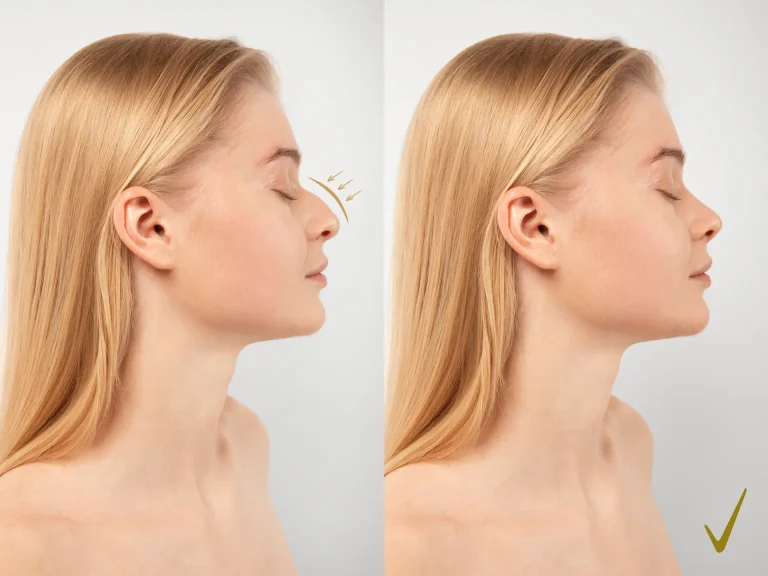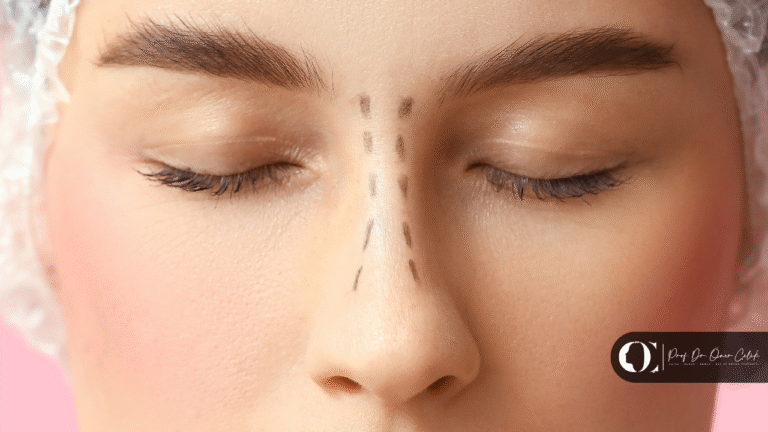


The core principle of male rhinoplasty is to avoid over-reduction — and there are two separate reasons for this. Over-reduction can create a feminine look by eroding masculine definition, and it can also affect breathing by weakening the support structure. Because post-traumatic structural problems are also common in male patients, the aesthetic and functional sides of the assessment should be carried out together.
The concern male patients bring to a consultation can usually be summed up in a single sentence: “I want my nose fixed, but I don’t want my face to change.”
This concern has a concrete basis. An over-refined nose on a male face creates a mismatch that is hard to define but easy to notice.
But there is another, less discussed side to the subject — and it is the side that comes up every day in ear, nose and throat practice.
The over-reduction that feminises a male nose can also impair breathing.
In this article I explain that connection and how it changes planning.
Anatomical differences
The male nose is not only larger than the female nose; it is also structurally different.
- The skin is thicker and richer in oil glands
- The cartilage is stronger and more resilient
- The bony structure is more prominent and wider
- The skeletal framework is sturdier
At first glance these features look like a surgical advantage — a stronger structure gives the impression that it allows more shaping.
In reality the opposite is true. The reason is explained in the next section.
The thick-skin dilemma
This section contains the real technical tension in male rhinoplasty.
Thick skin partly absorbs the shaping underneath it. The literature puts it clearly: if the skin is very thick and oily, changes made inside may not show on the outside.
A natural conclusion follows: if a noticeable change is desired, more extensive surgery is needed.
And here is the dilemma:
| What seems necessary | What is risky |
|---|---|
| More intervention for the change to show through thick skin | In men, too much intervention leads to feminisation |
| More intervention = a more visible result | More intervention = risk of losing support |
This tension is what makes male rhinoplasty technically more difficult. The literature also states that male rhinoplasty is technically more demanding because of thick skin, strong cartilage and a narrower margin for error.
In addition, swelling lasts longer in thick skin and the final result appears later. This is an expectation that should be discussed before surgery.
The two consequences of over-reduction
This is the central section of the article.
The core principle in the literature is expressed as follows: male rhinoplasty requires a more conservative approach to avoid over-reduction. Preserving adequate support within the cartilage and the dorsum is critical both for maintaining masculine definition and for preventing collapse.
Note that two separate reasons follow from a single principle.
First consequence: feminisation
The changes that read as feminine on a male face are well defined:
- Over-lowering the dorsum. A concave profile looks out of place on a male face.
- Over-rotating the tip upwards. One of the most noticeable feminine signs.
- Over-narrowing the nose. It looks out of proportion next to a strong jawline and brow ridge.
- An over-refined tip. The literature notes that excessive refinement feminises the male face.
The goal as defined in the literature is: to create definition without sacrificing strength and character.
Second consequence: structural collapse
And this is where the ear, nose and throat perspective makes a difference.
The bridge and side walls of the nose do not only determine appearance — they are the support structure that keeps the airway open.
When the dorsum is reduced, the connection between the upper lateral cartilages and the septum is disrupted. If this area is not supported again, the internal nasal valve — the narrowest point of airflow — can narrow.
The figure in the literature is striking: approximately 80% of internal nasal valve collapse cases occur after rhinoplasty. Functional problems after rhinoplasty are also thought to affect approximately 10% of patients.
The same mechanism applies to the external valve: removing too much tissue from the lower lateral cartilages can cause the nostril wall to collapse inwards during breathing.
The result: one mistake, two problems
When a male nose is over-reduced, the result is a nose that both looks feminine and is harder to breathe through.
And both are the result of the same decision.
That is why, in male rhinoplasty, the question of “how much to remove” is not purely an aesthetic one.
I discuss the approach to nasal valve problems separately on the nasal valve surgery page.
Why are functional problems more common in men?
In the surgical literature, frequent post-traumatic pathology is explicitly listed among the features that define male rhinoplasty.
The reasons are understandable: contact sports, work accidents, knocks in childhood.
And trauma rarely leads to a single problem. The clinical description in the same source reads: post-traumatic nasal deviation and dorsal hump; deviation of the nose and septum with a dorsal hump together with internal valve collapse.
In other words, the aesthetic complaint and the functional problem are often two sides of the same event.
What the examination reveals
The literature contains a striking observation: many men who seek consultation for aesthetic reasons learn during the examination that they have structural problems causing chronic obstruction, snoring or shortness of breath during exercise.
This is a picture I see frequently. The patient comes because of the hump on the bridge; the examination reveals a deviated septum, enlarged turbinates or valve narrowing.
And they often say: “I’ve always found it harder to breathe on one side, but I’d got used to it.”
What is assessed:
- Septal deviation — discussed on the septoplasty page
- Turbinate enlargement — in the article on turbinate hypertrophy
- Nasal valve narrowing — should be assessed dynamically during breathing
- Bone and cartilage deformities due to previous trauma
The third item is especially often missed. Valve collapse can be overlooked on a static examination; it needs to be assessed while the patient is breathing.
The goal: preserving masculine lines
The literature consistently describes the features preferred in the male nose:
| Feature | In the male nose |
|---|---|
| Dorsal profile | Straight or slightly convex |
| Dorsal height | Higher |
| Overall line | More angular, stronger |
| Tip position | Slightly lower, neutral rotation |
| Supratip break | Not desired |
| Small hump | Acceptable |
The literature sums it up: after surgery men generally prefer a nose that looks stronger, straighter and more angular. Most male patients want improvement without the nose looking over-refined.
The hump question
This is the most frequently misunderstood topic among male patients.
In female rhinoplasty the hump on the bridge is usually removed completely. In men, however, preserving a small hump is acceptable — and some patients even prefer it.
The reason is that an over-flattened or concave dorsum reads as distinctly feminine on a male face.
So the right question is not “should the hump be removed” but “how much of it should be removed”.
Structural support: a preserving approach
In male rhinoplasty, structural grafts are often not an aesthetic choice but a necessity.
As noted in the literature, surgeons frequently use structural grafting techniques to strengthen the nose while reshaping it in a controlled way.
Grafts used:
- Spreader graft: Placed between the upper lateral cartilages and the septum; preserves or restores the internal valve angle
- Columellar strut: Strengthens tip support
- Alar batten graft: Supports the nostril wall
- Lateral crural strut graft: Supports the lower lateral cartilages
These grafts share the same purpose: preserving the support structure while shaping.
In some cases, preservation approaches based on reshaping the existing structure rather than removing it extensively may also be considered. This is particularly relevant for patients who want limited change and wish to keep their structure.
Expectations: “better” is not enough
The literature describes a communication issue specific to male rhinoplasty.
Whereas female patients usually come with more specific aesthetic goals, men often say they want their nose to look “better” or “more masculine” — without wanting a dramatic change.
And the warning in the source is clear: if the surgeon and the patient do not share the same vision, this can lead to disappointment.
The practical consequence is that consultation becomes more critical for male patients.
A vague goal can turn into “this isn’t what I wanted” after surgery. That is why what will be preserved should be discussed as much as what will change.
Correcting a prejudice
I want to add this point because it is explicitly addressed in the literature.
Surgical sources note that there is a negative perception of the male rhinoplasty patient — that they are hard to satisfy and may have psychological issues.
But the same source adds: current literature and the authors’ experience do not support a higher prevalence of body dysmorphic disorder or lower satisfaction among male patients.
This is a noteworthy correction. What is different about the male patient is not his psychology but his anatomy and his goal.
Recovery
The general course is similar, but with two differences:
- Swelling lasts longer. Thick skin holds swelling longer.
- The final result appears later. In thick skin, the tip area can take more than a year to settle.
| Period | What to expect |
|---|---|
| Week 1 | Swelling and bruising; splints are removed |
| Weeks 2–3 | Return to social life |
| Months 1–3 | Most of the swelling subsides |
| Months 6–12 | The shape becomes clearer |
| 12 months and beyond | The tip settles in thick skin |
A separate note on the functional side: in the early period after surgery, breathing may temporarily become harder because of swelling. This is an expected course; improvement usually begins to be felt from weeks 2–4.
Patients with a beard should ask their doctor about shaving in the first days after surgery.
What to discuss before deciding
- Do I have a problem on the breathing side? Has it been assessed during the examination?
- Have my valves been assessed while I breathe?
- Do previous injuries affect the result?
- Is my skin thick, and how does that limit the achievable change?
- How much of the dorsal hump will be removed?
- Will structural grafts be used?
- Which features will be preserved?
From an ENT perspective, the second question is the most decisive, and it is rarely asked. Valve collapse can be missed by looking at a nose at rest.
The seventh question is at the heart of managing expectations. Discussing what will be preserved is as important as discussing what will change — because feminisation usually results from changing what should have been preserved.
In summary
The core principle of male rhinoplasty is to avoid over-reduction, and there are two reasons for this.
The first is aesthetic: over-lowering the dorsum, over-rotating the tip and over-narrowing the nose read as feminine on a male face.
The second is functional: the same structures are the support system that keeps the airway open. A reduction without adequate support can lead to internal or external valve collapse. The literature reports that approximately 80% of internal nasal valve collapse cases occur after rhinoplasty.
In other words, over-reduction of a male nose can produce two separate problems from a single decision.
In addition, post-traumatic structural problems are common in male patients, and some patients who seek help for aesthetic reasons learn during the examination that they have functional problems they had not noticed before.
Thick skin creates a further tension: more extensive surgery is needed for the change to show, yet in men extensive surgery increases both risks. This balance is what makes male rhinoplasty technically more demanding.
For anyone considering rhinoplasty, it is advisable to be examined by an ear, nose and throat specialist so that both the aesthetic goal and the breathing situation can be assessed. For general information on the procedure, see the rhinoplasty page.
You can send any questions you have via WhatsApp; I add frequently asked topics to the article.
This content is for information only and does not replace a medical examination, diagnosis or treatment. Results vary from person to person. For your individual situation, please consult a physician in the relevant specialty.
Frequently Asked Questions
Is male rhinoplasty different from female rhinoplasty?
Yes. In the male nose the skin is thicker, the cartilage stronger and the bony structure more prominent. The goals are different too: a straight or slightly convex dorsum, a neutral tip position and more angular lines are preserved. The literature states that male rhinoplasty requires a more conservative approach to avoid over-reduction.
Can rhinoplasty make a male nose look feminine?
This risk comes from over-reduction. Over-lowering the dorsum, over-rotating the tip upwards, over-narrowing the nose and an over-refined tip read as feminine on a male face. The goal is to create definition without sacrificing strength and character.
Does over-reduction affect breathing?
Yes. The bridge and side walls of the nose are also the support structure that keeps the airway open. A reduction without adequate support can lead to internal or external valve collapse. The literature reports that approximately 80% of internal nasal valve collapse cases occur after rhinoplasty.
Why are breathing problems more common in men?
In the surgical literature, frequent post-traumatic pathology is listed among the features that define male rhinoplasty. Contact sports, work accidents and childhood knocks can cause septal deviation, bone deformity and valve collapse.
Is it common to seek aesthetic surgery and discover a functional problem?
It is a frequent situation. The literature states that many men who seek consultation for aesthetic reasons learn during the examination that they have structural problems causing chronic obstruction, snoring or shortness of breath during exercise.
How does thick skin affect the result?
Thick skin partly absorbs the changes made underneath; the literature notes that in very thick and oily skin, internal changes may not show on the outside. A noticeable change therefore requires more extensive surgery — but in men, extensive surgery increases the risk of both feminisation and loss of support. Swelling also lasts longer.
Should the whole dorsal hump be removed?
Not necessarily. In the male nose, preserving a small hump is acceptable; an over-flattened or concave dorsum can read as feminine on a male face. The question should not be “should the hump be removed” but “how much of it should be removed”.
Are male patients hard to satisfy?
Surgical sources note that such a perception exists, but the same sources state that current literature does not support a higher prevalence of body dysmorphic disorder or lower satisfaction among male patients. What differs is not psychology but anatomy and goals.
References
- Ishii LE et al. Clinical Practice Guideline: Improving Nasal Form and Function after Rhinoplasty. Otolaryngol Head Neck Surg, 2017. pubmed.ncbi.nlm.nih.gov
- Rhee JS et al. Clinical consensus statement: Diagnosis and management of nasal valve compromise. Otolaryngol Head Neck Surg, 2010. pubmed.ncbi.nlm.nih.gov
This content is for information only and does not replace medical advice. Every medical procedure requires an individual assessment and may carry risks. Results vary from person to person.