

Nasal blockage affects everyday quality of life far more than we tend to think. Not sleeping well at night, waking up with a dry mouth, getting out of breath quickly during exercise, sounding nasal when speaking or constantly needing to breathe through the mouth… Over time, all of these can come to be accepted as “just the way I am”.
Yet healthy breathing through the nose is not merely a matter of comfort. The nose filters, humidifies and warms the air and prepares it for the lungs. When the nose is blocked, the body is forced to switch to mouth breathing. This may be linked to many complaints, from poor sleep and a dry throat to snoring and daytime tiredness.
One of the most common causes of nasal blockage is turbinate hypertrophy, often described simply as “enlarged turbinates”. The turbinates are structures naturally present inside the nose that help condition the air we breathe. In other words, they are not harmful or unnecessary tissue. The problem arises when they become larger than normal and narrow the airway.
This is where turbinate reduction and radiofrequency treatment come in. However, an important distinction must be made: not every nasal blockage is caused by enlarged turbinates, and not every case of enlarged turbinates needs a procedure straight away. The right approach is first to understand the cause of the blockage and then to create a treatment plan suited to the individual.
In line with Prof. Dr. Öner Çelik’s specialty in ear, nose and throat and head and neck surgery, the assessment of enlarged turbinates does not stop at the question “are the turbinates large?”. Septal deviation, allergic rhinitis, sinusitis, nasal valve narrowing, adenoids, the nasal lining and the patient’s quality of life should all be considered together.
What Are the Turbinates?
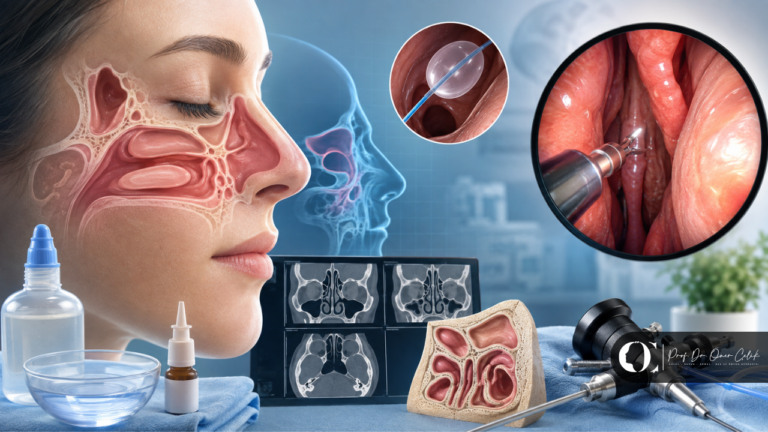
The turbinates, medically called conchae, are natural anatomical structures on the side walls of the nasal cavity. Each nasal cavity contains an inferior, a middle and a superior turbinate. The structure most often relevant to nasal blockage is usually the inferior turbinate.
The main task of the turbinates is to prepare the air we breathe in for the airways. Air entering the nose does not go straight to the lungs; inside the nose it is directed, humidified, warmed and filtered. The turbinates are an important part of this process.
That is why the question “should the turbinates be removed?” needs to be handled very carefully. The turbinates are not useless structures. On the contrary, they are important for healthy nasal breathing. But when they become excessively enlarged, they can narrow the airway.
We can think of the turbinates as an air-conditioning system in a room. When it works properly, it keeps the environment balanced. But when it becomes oversized and blocks the airflow, the air in the room suffers. In the same way, enlarged turbinates can make airflow through the nose more difficult.
What Is Turbinate Hypertrophy?
Turbinate hypertrophy means that the turbinates inside the nose become larger than normal and narrow the nasal airway. The enlargement may be on one side or both. In some people it causes constant blockage; in others it comes and goes.
Turbinate tissue is rich in blood vessels. It can therefore swell in response to allergy, infection, air pollution, cigarette smoke, dry air, hormonal changes or irritation inside the nose. Sometimes the swelling is temporary. Sometimes it becomes chronic and leads to persistent nasal blockage.
People with enlarged turbinates often say things like “my nose always feels full”, “my nose closes up at night”, “one side opens and the other blocks” or “I can’t breathe without a spray”.
However, enlarged turbinates should not be assessed in isolation. If there is a septal deviation, meaning the central partition of the nose is bent, the turbinate on one side may grow larger than on the other. In that case, reducing the turbinates alone may not always be enough.
What Causes Turbinate Hypertrophy?
There is no single cause. Usually several factors play a role together. When planning treatment for nasal blockage, the patient’s lifestyle, history of allergy, internal nasal anatomy and medications should therefore be assessed in detail.
Allergic Rhinitis
Allergic rhinitis is one of the conditions most often associated with enlarged turbinates. The nasal lining can react to pollen, house dust mites, animal dander, mould or other allergens. This reaction can cause swelling, discharge, itching, sneezing and blockage inside the nose.
If allergic rhinitis is not controlled, the turbinates can remain constantly swollen. Blockage may be felt more strongly in the morning, at the change of seasons or in dusty environments.
Septal Deviation
Septal deviation is a bend in the cartilage and bone partition that divides the nose into right and left cavities. When the septum bends to one side, the turbinate on the opposite side can enlarge over time. This makes the nasal blockage more complex.
For this reason, the septum must always be examined when assessing turbinate hypertrophy. If a significant part of the blockage comes from the septal bend, turbinate reduction alone may not be sufficient.
Chronic Sinusitis and Inflammation Inside the Nose
Chronic sinusitis, recurrent upper respiratory infections or long-lasting inflammation inside the nose can contribute to enlargement of the turbinate tissue. When the nasal lining is constantly stimulated, the swelling can become more permanent.
In this situation, the sinuses, postnasal drip, any nasal polyps and the condition of the lining should be assessed together with the turbinates.
Long-Term Use of Decongestant Nasal Sprays
Some decongestant sprays provide short-term relief. However, when used carelessly and for long periods, they can make nasal blockage worse. This is commonly called spray dependence.
A spray that brings relief at first can, over time, cause a rebound effect in the nasal lining. The person may become unable to breathe without the spray. Together with swollen turbinates, this can lead to more pronounced nasal blockage.
Air Pollution, Smoking and Environmental Factors
Cigarette smoke, heavy air pollution, chemical odours, dry air and constant exposure to dust can irritate the nasal lining. In the long term this irritation can make the turbinates more reactive.
Nasal blockage can be more stubborn especially in people who work indoors or are frequently exposed to dust or chemicals.
What Are the Symptoms of Enlarged Turbinates?
Enlarged turbinates do not cause the same symptoms in every patient. Some people only have blockage at night, while others struggle to breathe through the nose all day.
Persistent Nasal Blockage
The main symptom is nasal blockage. The person feels unable to get enough air through one or both nostrils. The blockage may be milder on some days and more pronounced on others.
Blockage that gets worse when lying down is common in turbinate hypertrophy, because the blood vessels inside the nose can fill up more in the lying position.
Sleeping with the Mouth Open
When the nose is blocked, the person starts breathing through the mouth during sleep. Morning dry mouth, a burning throat, dry lips and waking up tired may follow.
If this continues for a long time, sleep quality can be clearly affected. Even if the person thinks they have slept enough, they may not feel rested in the morning.
Snoring
If enlarged turbinates cause nasal blockage, they can increase snoring. However, the nose is not the only cause of snoring. The palate, uvula, tonsils, tongue base, weight and sleeping position can also play a role.
For this reason, in people who snore, the upper airway should be assessed as a whole, together with the nose.
Breathlessness During Exercise
Not being able to breathe enough through the nose during sport is a common complaint in people with nasal blockage. They switch to mouth breathing sooner and breathing comfort during exercise decreases.
This can become noticeable especially during running, walking, cycling or intense physical activity.
Reduced Sense of Smell
When nasal blockage lasts a long time, the sense of smell can also be affected. If air does not reach the smell area well enough, the person may perceive odours less.
However, enlarged turbinates are not the only cause of a reduced sense of smell. Sinusitis, polyps, viral infections and other causes can also affect it.
How Are Enlarged Turbinates Diagnosed?
Enlarged turbinates can be suspected from the symptoms, but a definitive assessment requires an ENT examination, because the cause of the blockage may not be the turbinates alone.
The examination assesses the structures inside the nose: whether the septum is straight, the size of the inferior turbinates, the colour of the lining, signs of allergy, discharge, crusting or polyps.
Where necessary, a nasal endoscopy may be performed. Endoscopy gives a more detailed view of the inside of the nose, so that deeper structures can be assessed as well as the front part of the nose.
Some patients may need allergy testing, imaging for sinus disease or other tests. However, imaging is not required for every nasal blockage. The decision is based on the examination findings.
Are Enlarged Turbinates the Same as a Deviated Septum?
No, they are not the same. Enlarged turbinates means swelling or growth of the turbinates inside the nose. Septal deviation is a bend in the cartilage and bone partition that divides the nose in two.
The two conditions are often seen together. When the septum bends to one side, the nasal cavity on the opposite side may remain wider. The turbinate on this wider side can enlarge over time in an attempt to balance it. The result can be blockage on both sides.
That is why the correct diagnosis is so important in treating nasal blockage. If the main problem is septal deviation, turbinate reduction alone may fall short. If the main problem is allergy-related turbinate swelling, medical treatment may come first.
In short, blockage inside the nose rarely has a single cause. The nose should be assessed as a whole.
How Is Treatment for Nasal Blockage Planned?
Treatment is planned according to the cause of the blockage. Not every patient receives the same treatment.
The first step is to understand whether the blockage is temporary or persistent. The nose can be blocked temporarily with a cold, flu or an acute allergic reaction. When these settle, the nose can open up again.
However, if the blockage has lasted for months, disturbs sleep, makes it impossible to breathe without a spray or affects quality of life, a more detailed assessment is needed.
Treatment options may include nasal sprays, allergy treatment, saline rinses, changes to the environment, a review of medications, turbinate reduction methods or, if there is an accompanying septal deviation, surgical planning.
The aim is not to steer the patient straight towards a procedure. First the cause is understood, then the appropriate option is chosen.
Can Enlarged Turbinates Be Treated with Medication?
In some patients, enlarged turbinates improve markedly with medication. Especially when allergic rhinitis or swelling of the lining is the main factor, nasal blockage can decrease with appropriate medical treatment.
Certain nasal sprays, allergy medication, saline rinses and advice on avoiding environmental allergens can help in this process.
However, not all enlarged turbinates resolve completely with medication. If the turbinate tissue has been enlarged for a long time, has become fibrotic, or the blockage persists despite medical treatment, turbinate reduction options may be considered.
The response to medication therefore varies from patient to patient. A spray that works very well for one person may not be enough for another.
What Is Turbinate Reduction?
Turbinate reduction is the general term for procedures that aim to relieve the nasal airway by reducing the volume of enlarged turbinates. The aim is not to destroy the turbinates completely, because they are important for nasal function.
The right approach is to reduce the excessively enlarged part of the turbinate in a controlled way and to make airflow inside the nose more balanced.
Turbinate reduction can be done with different methods. Radiofrequency, coblation, microdebrider reduction, submucosal turbinate reduction or surgical techniques may be considered in selected patients. Which method is suitable is decided according to the examination and the patient’s needs.
The most important principle in turbinate reduction is to preserve the function of the lining as far as possible, because the tissues inside the nose are needed not only for airflow but also for humidifying and filtering the air.
What Is Radiofrequency Treatment?
Radiofrequency treatment is one of the turbinate reduction methods used for enlarged turbinates. In this method, controlled energy is applied inside the turbinate tissue. The aim is to create a controlled effect within the tissue that leads to a reduction in volume over time.
Radiofrequency is usually applied to the inferior turbinates. After the procedure the tissue goes through a healing process, and the turbinate may shrink over time. This shrinkage does not occur fully on the same day; it can develop over weeks.
We can think of radiofrequency as a controlled tissue remodelling. Instead of cutting the turbinate out from the surface, the aim is to reduce its volume through the effect of energy within the tissue.
However, radiofrequency does not give the same result in every patient. Accompanying problems such as allergy, septal deviation, nasal valve problems or sinusitis should be assessed separately.
How Is Radiofrequency Turbinate Reduction Performed?
Depending on the patient’s situation and the doctor’s plan, radiofrequency can be performed under local anaesthesia or with other anaesthetic options. Before the procedure the inside of the nose is examined and the area to be treated is identified.
The radiofrequency probe is inserted into the turbinate tissue in a controlled manner, and energy is applied at specific points. The aim is to reduce tissue volume over time while treating the turbinate lining as carefully as possible.
The procedure is usually short. However, a short duration does not mean the procedure is simple or trivial. Good knowledge of the internal anatomy of the nose, correct patient selection and avoiding over-reduction are important.
After radiofrequency, there may be blockage, crusting, slight oozing or tenderness inside the nose for a few days. The doctor’s recommendations should be followed during this time.
Who May Be Suitable for Radiofrequency Treatment?
Radiofrequency treatment may be considered in selected patients with nasal blockage due to enlarged inferior turbinates who have not responded adequately to medical treatment.
People with Allergy-Related Turbinate Enlargement
In people whose turbinates frequently swell because of allergic rhinitis, medical treatment is planned first. If persistent blockage continues despite appropriate treatment, radiofrequency may be considered.
However, because the allergy does not disappear, allergy management may still be needed after the procedure. Radiofrequency can reduce the turbinates, but it does not on its own remove the allergic background.
People with Chronic Nasal Blockage
Radiofrequency may be considered in patients who have had nasal blockage for a long time, especially those who struggle to breathe through the nose at night and in whom enlarged turbinates have been found.
What matters here is understanding whether the blockage really comes from the turbinates. If there is a marked septal deviation, a turbinate procedure alone may not be enough.
Long-Term Users of Decongestant Sprays
In people who have used decongestant sprays for a long time, the nasal lining can become more reactive. In this case, the use of the spray must first be regulated and the health of the lining assessed.
If turbinate enlargement has become permanent in some patients, options such as radiofrequency may be planned. However, this decision must always be made after an examination.
Is Radiofrequency Suitable for Everyone?
No, radiofrequency is not suitable for everyone. If the cause of the blockage is not turbinate enlargement, radiofrequency may not provide the expected benefit.
For example, in a person with a marked septal deviation whose main problem is the bent septum, reducing the turbinates alone may not be enough. If there are nasal polyps, chronic sinusitis, nasal valve narrowing or enlarged adenoids, the treatment plan may change.
Over-reduction is not right either. The aim is not to eliminate the turbinates completely. Adequate function of the nasal lining must be preserved.
For this reason, the decision to use radiofrequency should be based on an ENT examination and a correct diagnosis, not on the patient’s wish alone.
Recovery After Radiofrequency Treatment
Recovery after radiofrequency varies from person to person. In the first days, nasal blockage may temporarily increase. This may be related to the tissue reaction and swelling. Some patients expect complete relief immediately after the procedure, but the effect of radiofrequency develops over time.
During recovery there may be crusting, slight dryness, tenderness or oozing inside the nose. The nasal care routine recommended by the doctor is important in this period.
As the tissues inside the nose heal, the airway may feel clearer. However, the result does not appear at the same time or to the same degree in every patient. Allergy, septal deviation or environmental factors can affect the outcome.
Follow-up appointments are therefore important. The effect of the procedure, healing inside the nose and any need for additional treatment are assessed at these visits.
When Does the Nose Open Up After Radiofrequency?
After radiofrequency, nasal patency usually improves over time. Blockage in the first days is not surprising, because temporary swelling can occur as the tissue responds to the energy.
Some patients notice they can breathe more easily within a few weeks. In others, improvement may be slower. As crusts inside the nose clear and the tissue recovers, airflow can become more comfortable.
Patience is important here. Radiofrequency should not be thought of as a magic procedure that opens the nose completely on the same day. The effect comes from controlled tissue healing.
Is Radiofrequency Treatment Permanent?
The effect of radiofrequency treatment can be long-lasting; however, if the cause of the turbinate enlargement persists, swelling may return over time. In particular, if allergic rhinitis, chronic nasal irritation or environmental triggers are not controlled, the symptoms may come back.
That is why allergy management, nasal care, avoiding cigarette smoke and following the doctor’s advice are important after radiofrequency.
In some patients a single procedure may be enough. Others may need a reassessment over time. This depends on the structure of the nose, the underlying cause and aftercare.
Can the Turbinates Grow Back?
Yes, in some cases the turbinates can enlarge or swell again, because they are living tissue and can react to allergy, infection, air pollution, cigarette smoke or irritation inside the nose.
If the underlying causes are not controlled after turbinate reduction, the blockage may therefore recur over time. Especially in patients with an allergic tendency, medical treatment and environmental measures are important for long-term success.
Turbinate reduction should not be seen as a stand-alone solution that removes all problems for ever. It requires correct patient selection and regular follow-up.
Should the Turbinates Be Removed Completely?
Generally not. Complete removal of the turbinates is not the aim, because they are important structures for nasal function. They humidify, warm and filter the air.
Removing too much tissue can lead to problems such as dryness, crusting, a burning sensation or paradoxical blockage inside the nose. The modern approach is therefore to reduce the volume of the turbinates while preserving their function, rather than removing them completely.
A measured, tissue-sparing approach is important in turbinate reduction. The aim is not to “empty” the nose but to support healthy airflow.
Enlarged Turbinates and Allergy
Allergy is one of the most important causes of turbinate hypertrophy. In allergic rhinitis, the nasal lining overreacts to allergens. As a result, the turbinates swell, the nose runs, and sneezing and itching may develop.
Radiofrequency treatment can reduce the volume of the turbinates, but it does not cure the allergy. Allergy control may therefore still be needed after the procedure in allergic patients.
In some patients, turbinate reduction alone without allergy management may not be enough, because the nasal lining can swell again as long as allergic triggers continue.
For patients with allergic rhinitis, the treatment plan should therefore be more holistic.
Do Children Get Enlarged Turbinates?
Yes, children can also have enlarged turbinates. However, when assessing nasal blockage in children, enlarged adenoids, allergy, frequent upper respiratory infections and anatomical factors should be considered together.
If a child constantly breathes through the mouth, snores, sleeps restlessly, has a blocked nose or frequent infections, an ENT assessment is important.
The treatment plan for children may differ from that for adults. Age, development, adenoids, allergic tendency and the severity of symptoms should all be assessed together.
Are There Risks with Radiofrequency Treatment?
As with any interventional procedure, radiofrequency treatment can involve certain risks and situations that need follow-up. Temporary blockage, crusting, dryness, slight bleeding, tenderness, infection or an insufficient response may occur.
If the turbinates are over-reduced, dryness inside the nose and functional problems may develop. Preserving the nasal lining is therefore important when planning the procedure.
The existence of these risks does not mean every patient will have a problem. However, the benefits, limitations and possible risks should be discussed openly before the procedure.
What to Look Out for After Turbinate Reduction
Care of the inside of the nose after the procedure is important. Nasal cleaning should be done as the doctor recommends, crusts should not be picked off forcibly, and follow-up appointments should not be missed.
Cigarette smoke, dusty environments and chemical odours can irritate the nasal lining. Avoiding such irritants in the early period can therefore support healing.
If there is nasal discharge, a bad smell, increasing pain, heavy bleeding or any unexpected complaint, a doctor should be consulted.
In allergic patients, allergy treatment may need to be continued after the procedure, because radiofrequency can reduce turbinate volume but does not remove the allergic background.
Why Is the Correct Diagnosis Important in Nasal Blockage?
Nasal blockage may not be due to a single cause. Septal deviation, turbinate hypertrophy, allergic rhinitis and nasal valve narrowing can all be present in the same patient. In this case, focusing on only one problem may not be enough.
For example, in a patient whose turbinates look large, the real airway problem may be a septal deviation. Or, in a patient with a bent septum, most of the blockage may come from allergic swelling of the lining.
A correct diagnosis leads to the right choice of treatment. A detailed ENT examination is important to avoid unnecessary procedures and to identify the treatment that is actually needed.
Assessing Turbinate Hypertrophy: Prof. Dr. Öner Çelik’s Approach
In line with Prof. Dr. Öner Çelik’s specialty in ear, nose and throat and head and neck surgery, the nose is considered not just as an air channel but as a functional organ when enlarged turbinates are assessed.
In patients with turbinate hypertrophy, the nasal lining, septum, nasal valve area, signs of allergy, sinus structure, sleep complaints and quality of life should be assessed together.
The decision to reduce the turbinates is not based simply on how large they look. The patient’s symptoms, response to medical treatment, examination findings and accompanying nasal problems are taken into account.
The aim is not to destroy tissue inside the nose unnecessarily, but to provide a more comfortable airway while preserving nasal function.
Conclusion: Enlarged Turbinates and Radiofrequency Treatment
Enlarged turbinates, or turbinate hypertrophy, are one of the common causes of nasal blockage. It is an important condition to assess, especially in people with night-time blockage, mouth breathing during sleep, snoring, difficulty breathing through the nose and a constant feeling of fullness in the nose.
Turbinate reduction and radiofrequency treatment are among the methods that can help relieve the nasal airway in suitable patients. However, not every nasal blockage is caused by enlarged turbinates, and not every case of turbinate hypertrophy needs a procedure.
The right treatment starts with understanding the cause. Is allergy the main factor? Is there a septal deviation? Is the nasal valve area narrow? Is there accompanying sinusitis? The answers to these questions determine the treatment plan.
In line with Prof. Dr. Öner Çelik’s specialty in ENT and head and neck surgery, enlarged turbinates should be approached by considering the treatment of nasal blockage, the health of the nasal lining, breathing function and quality of life together.
If you have had nasal blockage for a long time, breathe through your mouth at night or feel you often need decongestant sprays, seeing an ENT specialist for a personal assessment is a sensible step.
You can share this article with people close to you who are researching enlarged turbinates, turbinate reduction or radiofrequency treatment, and note down your questions to discuss with your doctor.
The results of any surgical or interventional procedure vary from person to person. It is advisable to get a detailed opinion from your doctor before the procedure.
Frequently Asked Questions
What are enlarged turbinates?
Enlarged turbinates means that the structures inside the nose called turbinates grow larger than normal and narrow the airway. The medical term is turbinate hypertrophy.
What is turbinate reduction?
Turbinate reduction is the general term for procedures that aim to relieve the nasal airway by reducing the volume of enlarged turbinates. The aim is not to remove the turbinates completely, but to reduce them while preserving their function.
What is radiofrequency treatment?
Radiofrequency treatment is a turbinate reduction method in which controlled energy is delivered into the turbinate to reduce tissue volume over time.
Do enlarged turbinates cause nasal blockage?
Yes. Enlarged turbinates narrow the nasal airway and can cause complaints such as nasal blockage, mouth breathing, night-time blockage and snoring.
Can enlarged turbinates be treated with medication?
If allergy or swelling of the lining is the main factor, medication can bring relief. However, persistent turbinate enlargement may not respond adequately to medical treatment.
Is radiofrequency suitable for everyone?
No. Radiofrequency is considered in selected patients whose nasal blockage is really caused by turbinate enlargement. If there is a septal deviation or another cause, the treatment plan may change.
Does the nose open up immediately after radiofrequency?
Not always. There may be temporary blockage in the first days. The effect usually develops over time as the tissue heals.
Can the turbinates grow back?
Yes, in some patients the turbinates can swell again due to allergy, infection, smoking, air pollution or irritants. Controlling the underlying causes is important.
Should the turbinates be removed completely?
Generally not. The turbinates are important structures that humidify, warm and filter the air. The aim is not complete removal but controlled reduction where necessary.
Do enlarged turbinates cause snoring?
If they cause nasal blockage, they can increase snoring. However, the nose is not the only cause of snoring. The upper airway should be assessed as a whole.
Are turbinate hypertrophy and septal deviation the same thing?
No. Turbinate hypertrophy is enlargement of the turbinates. Septal deviation is a bend in the central partition of the nose. The two can occur together.
Do children get enlarged turbinates?
Yes. Children can have enlarged turbinates. However, adenoids, allergy and frequent infections should also be assessed in children.
Is radiofrequency treatment painful?
Anaesthetic options are used during the procedure. Afterwards there may be tenderness, blockage or crusting. Pain and comfort vary from person to person.
Does turbinate reduction make breathing easier?
In suitable patients, turbinate reduction can help relieve the airway. However, the result depends on the cause of the blockage and any accompanying nasal problems.
Which doctor treats nasal blockage?
For long-lasting nasal blockage, enlarged turbinates, septal deviation or a radiofrequency assessment, you can see an ear, nose and throat specialist.
References
- Zhang K et al. Systematic Review of Surgical Interventions for Inferior Turbinate Hypertrophy. Am J Rhinol Allergy, 2023. pubmed.ncbi.nlm.nih.gov
This content is for information only and does not replace medical advice. Every medical procedure requires an individual assessment and may carry risks. Results vary from person to person.