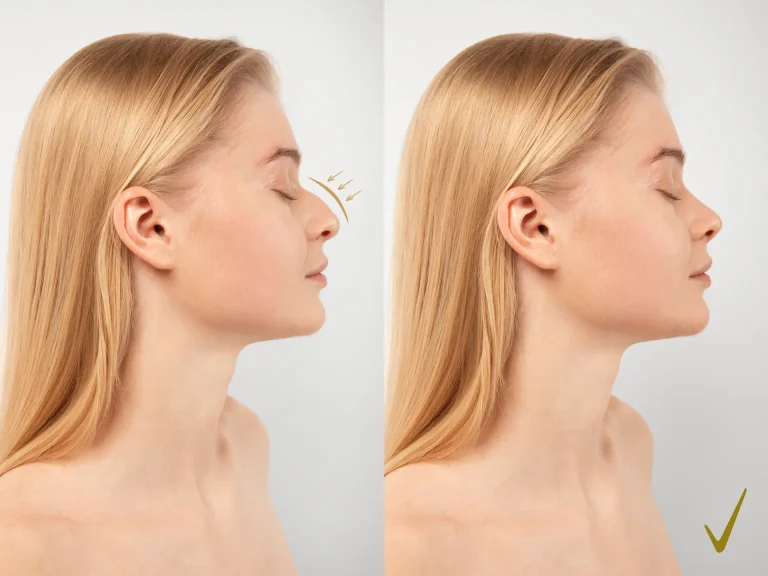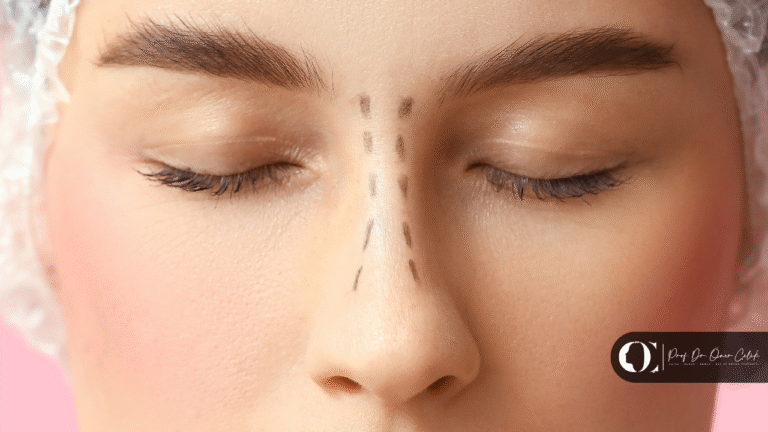


Many people researching rhinoplasty share a similar question: “My nose is fleshy – can rhinoplasty still give me a good result?” This concern is especially common among people with a thick nasal tip, oily skin, visible pores or soft nasal contours.
Some patients may have heard comments such as “Your nose has thick skin, surgery won’t work.” Others picture the thin, sharp and small noses they see on social media on their own face, and then feel disappointed when they are told during a consultation that they have a “thick-skinned nose”.
So is rhinoplasty on a thick-skinned nose really impossible? No, it is not. But it does require more careful planning, more realistic expectations, stronger tip support and a more patient healing process.
Rhinoplasty on thick-skinned noses can be challenging; however, with proper patient assessment and individual surgical planning, a natural, balanced appearance in harmony with the face can be the goal. The key point is not to force thick skin to behave like thin skin, but to build a plan that suits the anatomy of the nose.
From the perspective of Prof. Dr. Öner Çelik’s specialty in Ear, Nose and Throat and Head and Neck Surgery, rhinoplasty on a thick-skinned nose should not be seen as a simple nose reduction. The nasal skin, cartilage support, internal airway, tip structure, facial proportions and breathing function should all be considered together.
What Is a Thick-Skinned Nose?
A thick-skinned nose is one in which the skin and the soft tissue beneath it are thicker than average. This is usually most noticeable at the nasal tip, which may look rounder, fuller, softer in its transitions or “fleshy”.
In thick-skinned noses, the skin reflects the shape of the underlying bone and cartilage less than in thin-skinned noses. Even if the surgeon makes millimetre-level changes to the nasal framework, thick skin may show these fine details only to a limited extent.
You can compare this to furniture under a thick blanket. Even if you change the shape of the furniture, a thick cover makes the details look softer from the outside, while a thin fabric shows the shape underneath more clearly. The nasal skin is likewise an important “cover” that determines how the result of a rhinoplasty shows on the outside.
The area that needs the most attention in thick-skinned noses is the tip. The refinement, contour and definition aimed for in tip surgery may appear later and to a more limited degree, depending on skin thickness.
What Does a “Fleshy Nose” Mean?
In everyday language, a “fleshy nose” usually describes a nasal tip that looks large, round, full or wide. Medically, this expression is not a diagnosis on its own; it is rather the way people describe the appearance of their nose.
Several different structures can contribute to a fleshy look. The skin may be thick, there may be more subcutaneous fat, the tip cartilages may be wide or poorly supported, the nostrils may be flared, or the tip may appear droopy.
For this reason, reducing a fleshy nose does not simply mean removing skin or sharpening the tip. The real question is which structure of the nose is causing the full appearance.
In some patients the issue really is skin thickness. In others the cartilages are wide. Some noses have both thick skin and weak tip support. Planning should be based on this.
Why Is Rhinoplasty More Difficult on Thick-Skinned Noses?
There are several reasons why thick-skinned rhinoplasty is considered more difficult. The first is that thick skin reflects fine surgical details underneath less clearly.
On a thin-skinned nose, even a small change to the cartilage can be seen quickly from the outside. On a thick-skinned nose, the same change looks softer. Surgical planning should therefore be stronger, more supportive and based on a more patient approach to healing.
The second difficulty is swelling. Thick-skinned noses may hold swelling for longer after surgery, and swelling at the tip in particular may take longer to settle than in thin-skinned noses.
The third difficulty is managing expectations. Expecting a very small, overly sharp, very upturned or completely thin nose from a thick-skinned nose may not be realistic. The aim here is to make the nose more balanced, more natural and more in harmony with the face.
In short, rhinoplasty on thick skin can be difficult, but difficult does not mean impossible. What matters is understanding the limits of the nose correctly and building a surgical strategy around them.
Is Rhinoplasty on a Thick-Skinned Nose Impossible?
No, it is not impossible. However, it should not be planned in the same way as for thin-skinned noses. Success with thick skin does not come from making the nose smaller than necessary, but from creating a strong, balanced framework that the skin can sit on.
At this point, some patients need to adjust their expectations. Instead of “I want my nose to be much smaller”, the goal “I want my nose to look more refined, more natural and more in harmony with my face” is far healthier.
Very aggressive reduction does not always give a good result on thick-skinned noses. If the underlying support is weakened, the thick skin may not contract enough, and the tip can end up looking rounder, droopier or less defined.
For this reason, the surgical approach is often built not on “removing excess tissue” but on “strengthening the nasal framework and creating a solid structure for the skin to settle on”.
Is the Aim to Make a Thick-Skinned Nose Smaller?
This is a very important question. The aim of rhinoplasty on a thick-skinned nose is not always to make it as small as possible. In some cases, trying to reduce the nose too much can even make the result look worse.
Thick skin needs time and support to adapt to the framework underneath. If the framework is reduced more than necessary, the skin may not settle properly onto the new structure. The tip may stay round or tend to drop over time because of loss of support.
The main goals in thick-skinned noses are therefore: better support for the tip, a nasal bridge in harmony with the face, balancing the nostrils when needed, reducing the round look of the tip in a controlled way, and preserving breathing function.
In other words, “reducing a fleshy nose” usually means “controlled reduction and strong shaping”. Making the nose smaller is not, on its own, a measure of success.
Why Is the Nasal Tip So Important in Thick-Skinned Noses?
The most critical area in thick-skinned noses is usually the tip, because this is where thick skin is most noticeable. The tip can look round, wide, droopy or poorly defined.
In tip surgery, the cartilages can be reshaped, supported and brought into a more balanced position. In patients with thick skin, however, refinement of the tip takes time. In the first months, the tip may still look swollen or round.
This can be psychologically challenging, because people often want to see a slimmer tip straight after surgery. With thick skin, though, the result appears gradually.
Here, patience really is part of the treatment. It is not right to judge the tip as “unsuccessful” in the early period. Settling of the tip in thick-skinned noses can take months, and in some cases longer.
Which Techniques Are Used for Thick-Skinned Rhinoplasty?
The technique depends on the patient’s nasal structure. No two thick-skinned noses are the same: some have a dorsal hump, some a wide tip, some flared nostrils, and in others breathing problems are the main issue.
Strengthening the Tip Cartilages
Tip support is very important in thick-skinned noses, as weak cartilage may not be able to carry thick skin. The tip cartilages can therefore be reshaped and supported.
Cartilage grafts may be used in some patients. These grafts can be planned to help the tip become more stable and defined. However, the same technique is not used in every patient.
Shaping the Nasal Bridge to Suit the Face
If there is a hump or a high bridge, it can be adjusted according to facial proportions. Lowering the bridge too much is not always right in thick-skinned noses, as it can create a mismatch between the tip and the bridge.
For a natural appearance, the bridge, the tip and the transition between forehead and nose should be assessed together.
Assessing the Nostrils
In fleshy noses the nostrils may be wide or flared. In this case their width is assessed together with facial proportions, and in selected patients where it is considered necessary, procedures on the nostrils can be planned.
However, narrowing the nostrils too much can create an unnatural look and affect breathing, so a measured approach is important.
The Open Rhinoplasty Approach
Open rhinoplasty may be preferred in some patients with thick skin. The open technique allows the tip cartilages and supporting structures to be seen more clearly.
Especially for tip shaping, support grafts, correcting asymmetries and complex nasal structures, the open approach can give the surgeon a wider field of assessment.
This does not mean that every thick-skinned nose must be operated on with the open technique. The method is chosen according to the patient’s anatomy and the surgical plan.
Is Piezo Rhinoplasty Used for Thick-Skinned Noses?
Piezo rhinoplasty is a surgical technology that helps shape the nasal bones in a more controlled way using ultrasonic vibrations. If the hump or bony framework of a thick-skinned nose needs to be adjusted, piezo technology can be used in some patients.
However, piezo rhinoplasty does not thin thick skin. This is an important distinction: the piezo device allows precise work on bone, but it does not remove skin thickness.
In a thick-skinned nose, the result is not determined by bone work alone. Tip support, cartilage structures, skin thickness, swelling and the patient’s own healing characteristics all influence the outcome together.
Piezo technology can therefore contribute to surgery in some cases, but it should not be seen as a miracle solution for thick-skinned rhinoplasty on its own.
Can the Nasal Skin Be Thinned?
This is one of the most frequently asked questions about thick-skinned rhinoplasty: “Is it possible to thin the skin?”
In some selected cases, limited adjustments can be made to the soft tissue beneath the skin. Thinning the nasal skin excessively can be risky, however, because the blood supply to the skin must be preserved. Aggressive procedures that damage the skin can lead to healing problems.
The main strategy in thick-skinned noses is therefore not to thin the skin completely, but to strengthen the framework underneath so that the skin can settle onto it better.
The issue should not be seen simply as “too much skin”. The nasal skin is living tissue and needs to be protected during healing. Careful planning is very important here.
How Is a Fleshy Nose Reduced?
Reduction of a fleshy nose is planned differently depending on the person’s nasal structure. The tip, bridge, nostrils, cartilage support and, if needed, the internal structures of the nose are assessed together.
If the tip is wide and round, the cartilages can be reshaped. If support is weak, it can be strengthened. If the nostrils are wide, narrowing can be planned in selected cases. If there is a hump on the bridge, it can be adjusted to suit facial proportions.
However, the goal of reducing a fleshy nose is not “to make the nose as small as possible”. With thick skin, excessive reduction can make it harder for the skin to adapt to the new structure.
A more appropriate goal is to refine the nose, bring it into harmony with facial proportions and give the tip better support.
Is a Natural Result Possible with Thick Skin?
Yes, a natural result is possible with thick skin. But “natural” needs to be defined correctly. Aiming for a very sharp, extremely thin nose with pronounced contours is often not realistic for a thick-skinned nose.
A natural result is one that suits the person’s face, does not disturb facial expressions, improves the balance between nose and face and does not look operated. With thick skin, a successful result usually means not a “very thin nose” but a “more balanced, more refined and more harmonious nose”.
In my view, the healthiest approach to thick-skinned rhinoplasty is to aim for a tidier, more balanced appearance without trying to erase the character of the nose entirely. Excessive changes that do not fit the natural structure of the face may be striking at first glance, but can look artificial in the long run.
What Is Recovery Like with Thick Skin?
Recovery with thick skin usually requires more patience, as thick skin can hold swelling for longer. Swelling at the tip in particular may go down later than in thin-skinned noses.
In the first weeks, the nose may generally look swollen and round. When the splint is removed, patients may feel that their nose is still large. This is a very common feeling, but the early appearance is not the final result.
In the first few months, swelling on the bridge may go down faster, while the tip slims down more slowly. In patients with thick skin, it may take longer for the tip to show its true shape.
Regular check-ups, patience and following your doctor’s advice are therefore very important. Jumping to conclusions in the early period can cause unnecessary anxiety.
When Does the Result Become Visible?
After rhinoplasty, the shape of the nose settles over time, and with thick skin this process may be slower. There is noticeable swelling in the first weeks. In the first months, the nose starts to take shape, but it can take longer for swelling at the tip to subside.
In general, patients may notice a clear change within a few months. With thick skin, however, a longer period may be needed to assess the final result. In some patients, residual swelling at the tip can take more than a year to go down.
Checking the mirror every day for small changes often increases anxiety. It is healthier to assess the change through photos taken at regular intervals.
With thick skin the result comes slowly – but that does not mean there will be no result. The healing timeline simply needs to be managed with more patience.
Why Does Swelling Last Longer with Thick Skin?
In thick-skinned noses, the soft tissue under the skin is denser and can retain fluid for longer after surgery. The tip area is one of the regions where swelling is most persistent.
In a thin-skinned nose, the cartilage framework may become visible more quickly as swelling goes down. In a thick-skinned nose, the skin adapts more slowly to the new framework.
For this reason, a round-looking tip can be expected in the early period after surgery in patients with thick skin. This does not always mean a poor result. As tissue healing continues, the contours of the nose can become more balanced.
Is Taping or Massage Needed with Thick Skin?
Recommendations for taping or massage after rhinoplasty vary from patient to patient. Some surgeons may recommend taping at certain stages, while in some patients massage or other measures may not be suitable.
It is therefore not advisable to tape or massage a thick-skinned nose on your own. Incorrectly applied pressure can damage the nasal tissues or negatively affect healing.
Following the care plan recommended by your doctor is the safest approach. Swelling management should be individual, especially with thick skin.
Is the Risk of Revision Higher with Thick Skin?
If expectations are not managed properly, the risk of dissatisfaction can increase with thick skin. If a patient expects a very thin, very small or very sharp nose, the result may not meet those expectations because of anatomical limits.
The need for revision does not depend on skin thickness alone. Surgical planning, the healing process, tissue response, cartilage support and the patient’s expectations also play a role.
Good initial planning is very important with thick skin. Supporting the tip, avoiding over-reduction and setting realistic goals can help reduce the risk of revision.
However, no surgical procedure can be said to carry zero chance of revision. Possible risks and realistic expectations should therefore be discussed openly before surgery.
Is Planning Different for Men and Women?
Yes, rhinoplasty planning can differ in some respects between men and women. This difference should be based on facial proportions, not on stereotyped beauty standards.
In men, over-narrowing the bridge or over-rotating the tip can spoil a natural look. In women, softer transitions and a more delicate tip may be planned depending on facial structure.
With thick skin, the most important issue regardless of gender is tip support, because thick skin requires a strong framework underneath.
Planning should therefore be individual. Generalisations such as “every male nose should stay strong” or “every female nose should be small” are not correct.
What Should You Expect from Thick-Skinned Rhinoplasty?
Managing expectations is perhaps the most important part of thick-skinned rhinoplasty. Patients should know that their nose may not take shape exactly like a thin-skinned nose.
A realistic expectation is this: the goal can be a nose that looks more balanced, more refined, more in harmony with the face and natural. The tip can be given more support, the bridge can be adjusted, and the nostrils can be assessed to improve proportions. A very small, sharp and artificial-looking nose, however, is not always possible or appropriate.
It is also important for patients to know their own face. Aiming for another person’s nose exactly can lead to disappointment, especially with thick skin, because every nose is assessed with its own skin, cartilage and bone structure.
What Should Be Considered Before Thick-Skinned Rhinoplasty?
A detailed assessment should be carried out before surgery. The nasal skin, tip cartilages, bridge, nostrils, septum and breathing function should be evaluated together.
Previous nasal surgery, history of trauma, allergies, skin type, smoking and general health should also be asked about.
Skin quality also matters in thick-skinned noses. If there is oily skin, a tendency to acne, prominent pores or skin inflammation, additional assessment of skin care before surgery may be needed.
Simulation or photo analysis can give some patients an idea. However, no digital image can predict the final result exactly. With thick skin in particular, there may be a difference between the simulation and the actual healing process.
What Should Be Considered After Thick-Skinned Rhinoplasty?
Following your doctor’s advice after surgery is very important. In the first weeks, the head should be kept elevated, knocks to the nose avoided, strenuous exercise avoided and check-ups not missed.
Because swelling can last longer with thick skin, patience is needed. Constantly checking the tip or taking photos every day in search of changes can increase anxiety.
It is important to protect the skin from the sun, continue skin care as recommended by your doctor and avoid unnecessary pressure on the nose.
Smoking can impair tissue healing, so your doctor’s advice on smoking before and after surgery should be followed.
Does Thick-Skinned Rhinoplasty Affect Breathing?
Breathing function should always be assessed when planning rhinoplasty. Thick-skinned noses may also have a deviated septum, nasal valve narrowing, enlarged turbinates or other structural problems inside the nose.
Rhinoplasty should not be thought of as a procedure that only concerns external appearance. The nose is the entrance to the respiratory system, and a nose that looks good but does not allow good breathing is not enough in terms of patient comfort.
This is why an ENT perspective is valuable in thick-skinned rhinoplasty. The internal airway should be preserved during aesthetic planning, and any functional problems should be assessed.
Is Non-Surgical Rhinoplasty Possible with Thick Skin?
Non-surgical rhinoplasty can be used in some selected cases for temporary contour corrections – for example, to camouflage small depressions or to make certain irregularities on the bridge look more balanced.
With thick skin, however, non-surgical methods do not make the nose smaller, do not permanently refine the tip and do not structurally correct a fleshy nose.
Fillers can make the nose look visually more balanced in some cases, but because they add volume, they should be considered carefully for large, thick-skinned noses. They may not be suitable for every patient.
If the aim is to reduce a fleshy nose, surgical planning rather than non-surgical methods is usually considered. In any case, the decision should be made after a personal assessment.
Common Mistakes in Thick-Skinned Rhinoplasty
One of the most common mistakes is trying to make the nose smaller than necessary. This can weaken nasal support and make it harder for the skin to adapt to the new structure.
Another mistake is giving the patient unrealistic expectations. Statements such as “it will be very thin”, “it will look exactly like the photo you want” or “it will settle in a short time” are not accurate.
A third mistake is neglecting internal nasal function. Breathing must always be assessed when planning rhinoplasty on thick skin.
Finally, judging the result in the early period is also a common mistake. Healing is slow with thick skin, and a round-looking tip in the first months does not always mean failure.
Thick-Skinned Rhinoplasty in Prof. Dr. Öner Çelik’s Approach
In line with Prof. Dr. Öner Çelik’s specialty in Ear, Nose and Throat and Head and Neck Surgery, rhinoplasty on thick skin is seen not only as aesthetic shaping but as a comprehensive process to be considered together with functional nasal health.
This assessment should look at the nasal skin, cartilage support, tip structure, bridge, nostrils, septum, breathing and facial proportions together.
With thick skin, the aim is not to make the nose artificially smaller but to achieve a look that is more in harmony with the face, more balanced and more natural. This requires individual surgical planning, the right choice of technique and patient follow-up during healing.
The same nose is not designed for every patient, because every face has different proportions, every nose has a different skin thickness and every person has different expectations.
Conclusion
Rhinoplasty on thick-skinned noses is not impossible, but it requires more careful planning and more realistic expectations. Reducing a fleshy nose usually means not just making it smaller, but supporting the tip, balancing the bridge, assessing the nostrils and creating a look in harmony with the face.
Thick skin is an important factor affecting the result of rhinoplasty. It may show fine surgical details to a limited extent and hold swelling for longer, so patience during recovery is very important.
In line with Prof. Dr. Öner Çelik’s ENT and Head and Neck Surgery specialty, thick-skinned rhinoplasty should be considered together with aesthetic appearance, nasal function and the goal of a natural result.
If you think you have a thick-skinned or fleshy nose and have questions about the width of your tip or the shape of your nose, a personal assessment by an ENT specialist is a sensible next step.
You can share this article with people close to you who are researching thick-skinned or fleshy nose rhinoplasty, and note down your questions to discuss with your doctor.
This content has been prepared for information purposes only. Please consult your doctor for any diagnosis, treatment or procedure decision. Results of any surgical or interventional procedure vary from person to person. You are advised to obtain a detailed opinion from your doctor before any procedure.
Frequently Asked Questions
Is rhinoplasty possible on a thick-skinned nose?
Yes, it is. However, compared with thin-skinned noses, it requires more careful planning, strong tip support and a more patient recovery.
Is thick-skinned rhinoplasty difficult?
It is considered more difficult, because thick skin reflects the underlying surgical details less and can hold swelling for longer after surgery.
How is a fleshy nose reduced?
It is planned individually by shaping and supporting the tip cartilages, adjusting the bridge and, if needed, assessing the nostrils.
Does the tip become slimmer in thick-skinned noses?
The tip can be made more refined and better supported. However, expecting a very sharp and thin tip with thick skin is not always realistic.
When does the result become clear with thick skin?
The result appears more slowly. Swelling may be noticeable in the first months, and it can take longer for the tip to settle and for the final appearance to be assessed.
Why does swelling last longer with thick skin?
Thick skin and the soft tissue beneath it can retain fluid for longer after surgery. The tip area in particular can be more resistant to swelling.
Can the result look natural with thick skin?
Yes, a natural result is possible. However, the aim should be a balanced, natural look in harmony with the face rather than a very small or overly sharp nose.
Is reduction limited in thick-skinned noses?
Often, yes. Excessive reduction can make it harder for the skin to adapt to the new structure, so controlled reduction and strong support matter more with thick skin.
Does piezo rhinoplasty help with thick skin?
Piezo rhinoplasty allows precise work on bone. However, it does not thin thick skin and does not, on its own, correct a fleshy-looking tip.
Does non-surgical rhinoplasty work on a thick-skinned nose?
Non-surgical methods can temporarily camouflage some small contour problems. However, they do not reduce a thick-skinned or fleshy nose and do not permanently refine the tip.
Can thick nasal skin be thinned surgically?
In some selected cases, limited adjustments can be made to the soft tissue beneath the skin. However, excessive thinning can be risky, as the blood supply to the nasal skin must be preserved.
Is the risk of revision higher with thick skin?
If expectations are not managed properly, the risk of dissatisfaction can increase. But revision does not depend on skin thickness alone; surgical planning, healing and tissue response also matter.
Is taping needed with thick skin?
Taping recommendations vary from patient to patient. Taping or massaging on your own without your doctor’s advice is not advisable, as incorrect application can affect healing.
Does thick-skinned rhinoplasty affect breathing?
Breathing function should always be assessed when planning rhinoplasty. A deviated septum, nasal valve narrowing or enlarged turbinates can be addressed together with the aesthetic plan.
Which doctor should I see for thick-skinned rhinoplasty?
For thick-skinned rhinoplasty, tip shaping, fleshy nose reduction and breathing problems, you can consult an Ear, Nose and Throat specialist.
References
- Ishii LE et al. Clinical Practice Guideline: Improving Nasal Form and Function after Rhinoplasty. Otolaryngol Head Neck Surg, 2017. pubmed.ncbi.nlm.nih.gov
This content is for information only and does not replace medical advice. Every medical procedure requires an individual assessment and may carry risks. Results vary from person to person.