Carotid Body Tumour
A carotid body tumour (glomus caroticum) is a mostly benign, slowly growing tumour that develops from small bodies where the carotid artery…

HEAD AND NECK ONCOLOGY
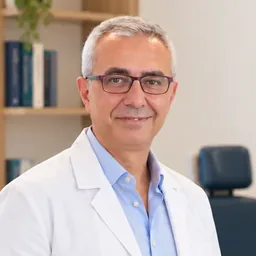
Content by Prof. Dr. Öner ÇelikProfessor of Otorhinolaryngology, Head and Neck SurgeryLast updated:
In the head and neck, vital functions such as speaking, swallowing, breathing, hearing and facial expression sit close together in a small area. That is why, with tumours in this region, the aim is to remove the tumour completely while preserving these functions as far as possible. For malignant tumours, the treatment decision is made together with the relevant specialties, such as radiation oncology and medical oncology.
Most of these symptoms have benign causes; however, an ENT examination is needed without delay, especially in people who smoke or drink alcohol.
The most common cause of a lump in the neck is a lymph node enlarged by an infection, and most of these shrink by themselves within a few weeks. Lumps that last longer than two to three weeks, grow, feel hard, are painless or are fixed to the skin and surrounding tissue, and lumps that come with hoarseness, difficulty swallowing or weight loss, should be assessed. A lump in the neck can arise from the thyroid gland, the salivary glands, the lymph nodes or the blood vessels; its source is identified with an examination, ultrasound and, if needed, a biopsy.
In head and neck tumours, the diagnosis becomes clear in a few steps: a detailed examination and, where needed, an endoscopic examination of the larynx and throat; imaging with ultrasound, CT, MRI or PET-CT; and a pathological diagnosis with a fine-needle or tissue biopsy. Once the definitive diagnosis and stage are known, the treatment options are discussed together with their effects on speech, swallowing and appearance.
Prof. Dr. Öner Çelik is a specialist in ear, nose and throat and head and neck surgery. From 2009 to 2024 he worked as a faculty member in the Department of Otorhinolaryngology – Head and Neck Surgery at Maltepe University Faculty of Medicine, and he became a professor in 2020. Consultations take place at the clinic in Suadiye, and operations are performed at Maltepe University Hospital. Bringing any previous ultrasound, CT, MRI and biopsy results to the consultation speeds up the assessment. Details are on the your treatment in Istanbul page.
A carotid body tumour (glomus caroticum) is a mostly benign, slowly growing tumour that develops from small bodies where the carotid artery…
Laryngeal cancer is a cancer that develops in the larynx (voice box), where the vocal cords are located; the most important risk…
Oral, tongue and lip tumours are cancers noticed as a sore that lasts longer than two weeks and does not heal, a…
Salivary gland tumours are lumps that most often occur in the parotid gland in front of the ear, and the vast majority…
Thyroid nodules are lumps that develop in the thyroid gland, and the vast majority are benign; thyroid cancer is found in a…
Briefly describe your concern; we will get back to you about an appointment and preparation.

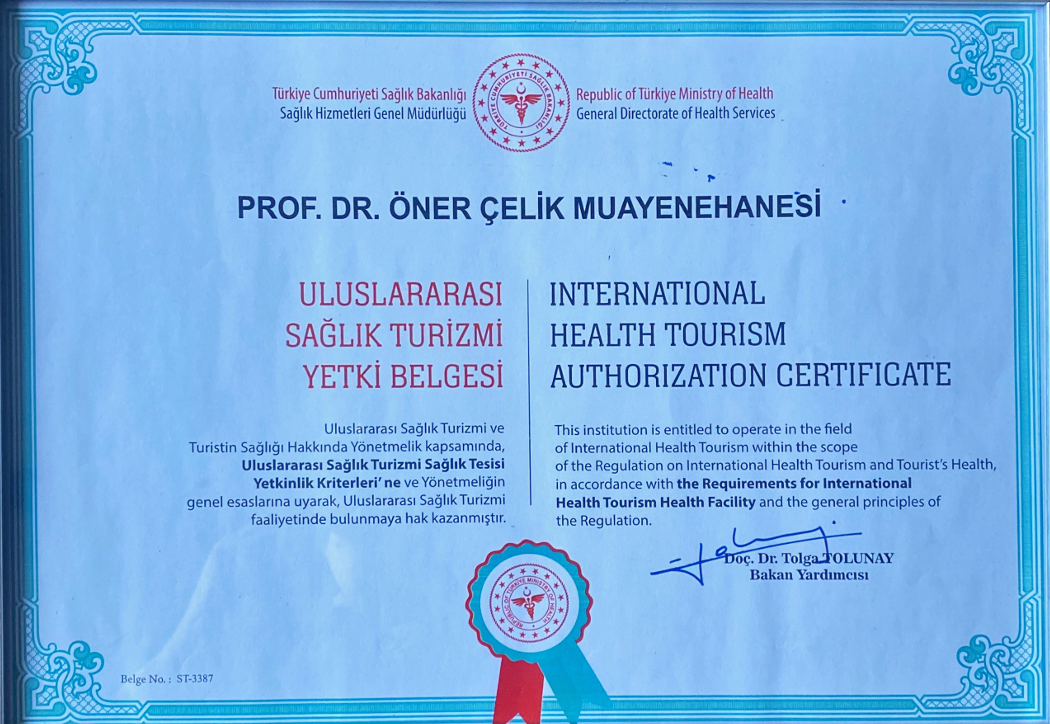
Prof. Dr. Öner Çelik’s clinic holds the International Health Tourism Authorisation Certificate issued by the Ministry of Health of the Republic of Türkiye.
Certificate no. ST-3387
 View certificate
Your cookie choice
Analytics and advertising cookies are used only with your consent. The form and WhatsApp work either way. Details