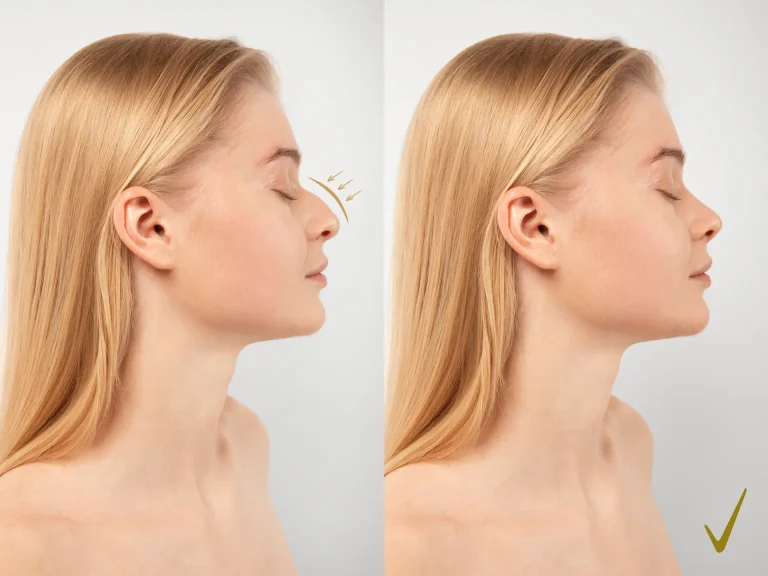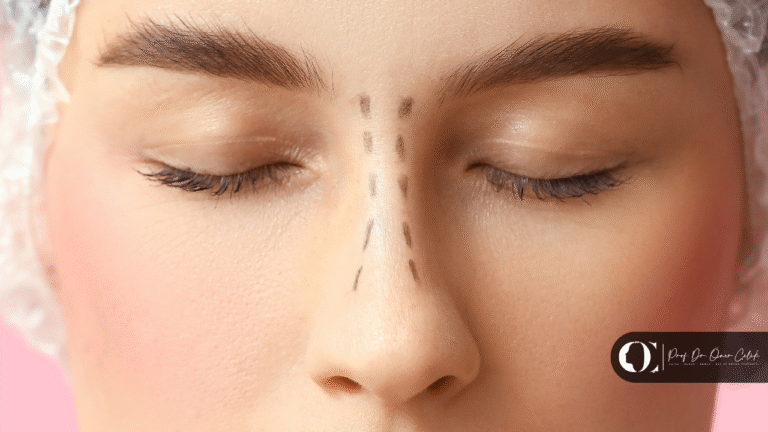


Tipplasty is a procedure aimed only at the nasal tip, and the bone is not touched. A suitable candidate is someone who is satisfied with the nasal bridge but bothered by the shape or definition of the tip. If there is a hump, a deviation of the bridge or a breathing problem, tip surgery alone is not enough. The main factor that determines the achievable definition is skin thickness.
Some patients researching rhinoplasty come to the consultation with a specific request: “My nose is fine overall; it’s only the tip that bothers me.”
That sentence matters — because it is exactly what determines whether tipplasty is appropriate.
Not everyone who is bothered by the tip is a candidate for tipplasty. And the reverse is also true: performing a full rhinoplasty on a suitable candidate means more surgery than necessary.
In this article I explain what tipplasty is, who it is suitable for and — more importantly — who it is not suitable for.
What is tipplasty?
Tipplasty is the reshaping of the cartilage structures that form the nasal tip. The nasal bridge, the bony structure and the overall axis are not touched.
There is a noteworthy detail in modern practice: the procedure is largely based on shaping with sutures rather than removing cartilage.
This is an important change of approach. In the past, cartilage was removed to refine the tip; while this provided definition in the short term, in the long term it could weaken support and cause the tip to drop. Today, preserving the cartilage and positioning it with sutures is preferred.
“Without breaking bone” is accurate here
I want to clarify this point, because the same phrase can be misleading in other contexts.
If a hump on the bridge is to be removed or the width of the nose narrowed, intervention on the bone is unavoidable — whatever device is used. I discussed this in the article on piezo rhinoplasty.
Tipplasty is different: because the procedure is limited to cartilage, the bone is genuinely not touched. Here the phrase “without breaking bone” is technically correct.
But on one condition: the problem must truly be limited to the tip. If it is not, tipplasty is not the right operation.
Which concerns is it suitable for?
- A wide, rounded tip — a poorly defined, bulbous appearance
- A drooping tip — a droop that becomes more noticeable when smiling
- An asymmetric tip
- An over-projected tip
- Lack of definition — tip-defining points that are not distinct
- Wide nostrils — assessed together in some cases
The second item is especially common. A tip that drops when smiling is due to weak tip support and can be addressed with tipplasty.
Who is it suitable for? A one-question test
At the centre of the suitability assessment is a single question:
Is the patient satisfied with the nasal bridge?
The literature states this as the key criterion for candidate selection: to be a good candidate, the patient must be satisfied with the nasal bridge. If there is a hump on the bridge, a full rhinoplasty is needed to correct the upper part as well.
Profile of a suitable candidate
- Satisfied with the nasal bridge, septum and nostrils
- Concern limited to the tip
- No breathing problem, or one that has been assessed separately
- Cartilage strong enough to support tip work
- Suitable general health
- Non-smoker, or able to stop
- Realistic expectations
The seventh item comes last but is the most decisive. I explain why shortly.
When tipplasty is not suitable
The literature clearly defines the situations in which an isolated tip approach is not recommended:
- A hump on the nasal bridge
- A deviated nasal bridge
- A deviated septum
- Cartilage too weak to support isolated tip work
In these situations, a comprehensive rhinoplasty may give a more harmonious and more durable result.
Why does the bridge matter? A visual trap
This section covers the most subtle aspect of the tipplasty decision.
The nose is perceived as a whole. A change in one area affects how the neighbouring area looks.
The surgical literature describes this relationship clearly: a slight depression of the bridge can draw attention to a hump that would otherwise go unnoticed. The reverse is also true.
The practical consequence is this: when the tip is refined, an existing hump on the bridge can look more prominent. The operation is technically successful, but the patient’s overall satisfaction falls.
That is why the suitability assessment looks at the whole nose, not just the tip.
The most critical issue: skin thickness
I want to highlight this under a separate heading, because the wording in the literature is quite clear.
The achievable change is largely determined by skin thickness. In thin skin the change can be noticeable. In thick skin it is more modest.
And this sentence matters: expecting otherwise is the most common cause of disappointment after tip surgery.
Why is that?
The mechanism is simple. Shaping in the tip area is done on the cartilage. Over this cartilage lies a covering of skin.
Thin skin reflects the shape underneath almost exactly. Thick skin, on the other hand, partly absorbs it — the refinement does not fully reach the surface.
This has two consequences:
- The achievable definition is limited. A very sharp, distinct tip may not be anatomically possible in a patient with thick skin.
- The result shows later. Swelling lingers in thick skin; the tip can take months, sometimes more than a year, to settle.
Discussing these two facts before surgery removes much of the anxiety afterwards.
Why is the tip the area that generates the most dissatisfaction?
I include this data because I find it interesting.
Current literature reports rhinoplasty revision rates in the range of 5–15%. And when the aesthetic complaints of dissatisfied patients are examined, 19–37% relate to the nasal tip.
In other words, the tip is the area of the nose that generates the most dissatisfaction.
The reason is understandable: the tip is the most visible and most mobile point of the face. It is also the most delicate part surgically — an intervention that weakens support shows itself over time.
Known adverse outcomes
The main risks described in the literature are:
- Pinched tip — an artificial-looking narrow tip due to over-narrowing
- Over-rotation — the tip turned up too much
- Asymmetry
- Tip ptosis — a droop that develops over time because of insufficient tip support
- Supratip fullness — usually due to scar tissue
What these risks have in common is striking: most result from too much intervention — not too little.
The effect of preserving support
The approach developed in response is to preserve and support the cartilage rather than remove it.
In one study using a support-focused suture technique, the revision rate for pinched-tip deformity was reported as 2.8%. This shows how preserving and strengthening the cartilage helps avoid the “overdone” look that patients fear.
An extra consideration in male patients
Tip surgery on a male nose requires a different balance.
As noted in the literature, over-refining the male tip produces a feminised result, which most male patients do not want. The goal is to achieve definition without narrowing or over-rotation.
This is a result reached with the same technique as in female patients, but to a different degree.
How is it performed?
Tipplasty can be performed with a closed or an open technique.
Closed technique: The incisions are inside the nose and leave no external scar. It may be preferred in cases requiring limited shaping.
Open technique: A small incision is added across the columella, the area between the nostrils. Once healed, this incision is usually inconspicuous, but it should be discussed as part of informed consent.
The choice depends on the scope of the procedure and the anatomy. I discussed the difference between the two techniques in the article on open rhinoplasty.
Recovery
The literature is clear: recovery takes longer than most patients expect.
- First week: Swelling and tenderness. Bruising is usually less than after a full rhinoplasty because the bone has not been touched.
- Weeks 2–3: Most patients can return to social life.
- Months 1–3: Most of the swelling subsides.
- Months 6–12: The tip continues to become more defined.
- 1 year and beyond: This period can be longer in patients with thick skin and in revision cases.
There is an important note on expectations here: the tip is the last part of the nose to settle. Early swelling subsides quickly, but the tip continues to refine for months.
So when a patient worries in the third month that “my tip is still thick”, what they are seeing is not the tip but swelling.
Tipplasty or full rhinoplasty?
| Tipplasty | Full rhinoplasty | |
|---|---|---|
| Scope | Tip cartilages only | Bridge, bone, tip and septum |
| Work on the bone | None | Usually yes |
| Bruising | Less | More noticeable |
| Operating time | Shorter | Longer |
| Suitable when | The concern is limited to the tip | More than one area is affected |
| Does it correct a hump on the bridge? | No | Yes |
The last row is decisive, and the decision is made on that row.
The literature sums it up: if the bridge is already balanced and the concern is only the tip, a full rhinoplasty may be more surgery than necessary. Conversely, if there is a hump, wide nasal bones or a deviation, tipplasty alone will not solve it.
The breathing side should not be forgotten
Tipplasty is a procedure aimed at shaping cartilage. Problems that make breathing difficult, however, arise from different structures: a deviated internal partition (septum), enlarged turbinates, narrowing of the nasal valve.
As noted in the literature, breathing problems often require a comprehensive structural assessment, including the septum.
That is why a breathing assessment should also be carried out when tip surgery is planned. I described deviation of the internal partition in the article on how to tell if your septum is deviated, and turbinate enlargement in the article on turbinate hypertrophy.
What to discuss before deciding
- Is my concern really limited to the tip rather than the bridge?
- Is my skin thick, and how does that limit the result?
- Could the bridge look more prominent once the tip is refined?
- Do I have a problem on the breathing side?
- Is my cartilage strong enough for this procedure?
- Will a closed or an open technique be used?
- How long will the result take to settle in my case?
The third question is almost never asked, but it is the most valuable. Discussing the visual relationship between the tip and the bridge from the outset prevents the feeling after surgery that “something is missing”.
In summary
Tipplasty is a procedure aimed only at the cartilages of the nasal tip, and the bone is not touched — in this context, the phrase “without breaking bone” is technically correct.
A suitable candidate is someone who is satisfied with the nasal bridge and whose concern is limited to the tip. If there is a hump or deviation of the bridge, a deviated septum or weak cartilage support, tip surgery alone is not recommended.
The main factor determining the achievable definition is skin thickness. In thin skin the change can be noticeable, while in thick skin it is more modest — and expecting otherwise is the most common cause of disappointment after this operation.
The tip is the area of the nose that generates the most dissatisfaction; 19–37% of the aesthetic complaints of dissatisfied patients relate to this area. Most known adverse outcomes result from too much intervention — which is why the current approach is to preserve and support the cartilage rather than remove it.
When the concern is the nasal tip, it is advisable to be assessed by an ear, nose and throat specialist to determine whether the concern is truly limited to the tip and how skin structure will affect the result. For general information on the procedure, see the rhinoplasty page.
You can send any questions you have via WhatsApp; I add frequently asked topics to the article.
This content is for information only and does not replace a medical examination, diagnosis or treatment. Results vary from person to person. For your individual situation, please consult a physician in the relevant specialty.
Frequently Asked Questions
Who is tipplasty suitable for?
It is suitable for people who are satisfied with the nasal bridge, septum and nostrils and whose concern is limited to the tip. The literature states that the key condition for being a good candidate is that the patient is satisfied with the nasal bridge.
Is rhinoplasty without breaking bone possible?
In tipplasty, yes. Because the procedure is limited to the tip cartilages, the bone is not touched. However, if there is a hump or deviation of the bridge, work on the bone is unavoidable, and tipplasty is not sufficient in that case.
Does tipplasty correct a hump on the bridge?
No. Tipplasty is a procedure aimed only at the tip; it does not correct a hump or deviation of the bridge. In these cases a full rhinoplasty is needed.
How does skin thickness affect the result?
Decisively. In thin skin the change can be noticeable, while in thick skin it is more modest. The literature states that expecting otherwise is the most common cause of disappointment after tip surgery. In thick skin the result also appears later.
Can the bridge look more prominent after the tip is refined?
It is possible. The nose is perceived as a whole, and a change in one area affects how the neighbouring area looks. The surgical literature notes that a slight depression can draw attention to a hump that would otherwise go unnoticed. That is why the assessment looks at the whole nose.
What are the risks of tipplasty?
The main reported problems are a pinched tip, over-rotation, asymmetry, tip ptosis due to insufficient tip support, and supratip fullness. Most of these result from too much intervention; the current approach is to preserve and support the cartilage.
Is revision needed?
Current literature reports rhinoplasty revision rates of 5–15%. Of the aesthetic complaints of dissatisfied patients, 19–37% relate to the nasal tip. In one study using a support-focused suture technique, the revision rate for pinched tip was reported as 2.8%.
When does the result become clear?
Most of the swelling subsides in the first three months, but the tip is the last part of the nose to settle and continues to become more defined over 6–12 months. This period can be longer in patients with thick skin and in revision cases.
Prof. Dr. Öner Çelik — Otorhinolaryngology, Head and Neck Surgery. A graduate of Istanbul University Faculty of Medicine, he completed his ENT specialty training at Taksim Training and Research Hospital. He served as a faculty member in the Department of Otorhinolaryngology and Head and Neck Surgery at Maltepe University Faculty of Medicine and, in 2013, completed advanced training in endoscopic sinus surgery and skull base surgery at The Ohio State University Wexner Medical Center. About me
Sources
- Rhinoplasty Tip-Shaping Surgery. StatPearls, NCBI Bookshelf.
- Nasal Tip Refinement — candidate selection, risks and revision data. Plastic and Aesthetic Research, 2024.
- Jung DH, et al. Support-focused suture technique and pinched-tip deformity revision rates.
- Tip plasty candidate selection and outcomes. Facial Plastic Surgery Clinics of North America, 2022.
This content is for information only and does not replace medical advice. Every medical procedure requires an individual assessment and may carry risks. Results vary from person to person.