
What is a deviated septum?
A deviated septum means that the central wall dividing the two sides of the nose (the septum) has shifted to one side. The septum is made of cartilage and bone; when it is bent, it narrows the airway in one or both nostrils and makes breathing through the nose harder.
Many people have a slight deviation that causes no complaints. Treatment is needed when the deviation disturbs breathing, sleep or the ventilation of the sinuses. A deviation sometimes also makes the nose look crooked from the outside.
What are the symptoms?
- A constantly blocked nose on one or both sides, worse with colds and allergies
- Sleeping with the mouth open, snoring and a dry mouth in the morning
- Always needing to lie on the same side to breathe
- Recurrent nosebleeds (the lining dries out over the deviation)
- Frequent sinusitis, postnasal drip and headache
- A reduced sense of smell and getting tired quickly on exertion
What causes it?
Most deviations are present from birth or develop during growth. Blows to the nose in childhood or adulthood (sport, falls, road accidents) can also displace the septum. Because the supporting tissues of the nose weaken with age, an existing deviation can become more noticeable over time. Allergic rhinitis and sinusitis swell the lining and narrow an already narrow airway even further.
How is it examined and diagnosed?
A deviated septum is diagnosed at an ear, nose and throat examination. After the front of the nose is examined with a light, the whole inside of the nose is assessed with an endoscope (a thin instrument with a camera at its tip).
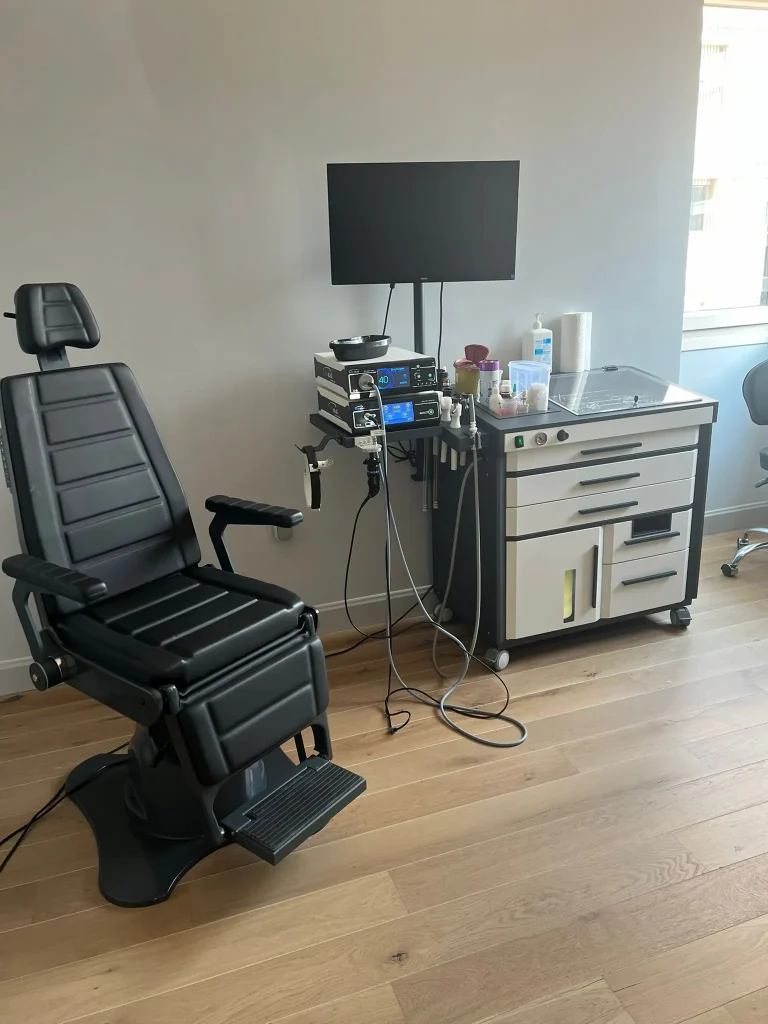
Endoscopy shows not only the deviation but also deviations further back, the turbinates, the sinus openings and other causes of blockage such as adenoids, polyps or a mass. If there are sinus complaints, a CT scan may be requested. That way, if surgery is needed, every problem causing the blockage is planned in a single operation.
Can a deviated septum be corrected without surgery?
No. A structural deviation of the septum is not corrected by medicines or exercises, and it does not go away by itself. Nasal sprays and allergy medicines can ease the complaints by reducing swelling of the lining, but they do not change the deviation itself. If complaints continue despite medical treatment, septoplasty is the way to correct the deviation.
Long-term use of decongestant nasal sprays can make the turbinates swell whenever the spray wears off, so it is best not to use them for long periods on your own.
How is septoplasty performed?
Septoplasty straightens the deviated septum and places it in the midline of the nose. It is performed under general anaesthesia and takes about 30 minutes on average.
- The incision is made inside the nostril; there is no external incision or scar.
- The lining covering the septum is lifted, and the bent cartilage and bone are straightened, or removed, reshaped and placed back in the midline.
- The lining is put back and packs that stay for a few days are placed inside the nose.
If the turbinates are enlarged, turbinate reduction; if the nasal valve is narrow, nasal valve surgery; and if there is chronic sinusitis, endoscopic sinus surgery can be carried out in the same operation.
Does septoplasty change the shape of the nose?
Septoplasty is performed on the internal structure of the nose; the outside of the nose usually does not change. If the nose also looks crooked from the outside, or the person is also unhappy with its shape, the deviation can be corrected in the same operation as rhinoplasty; this operation is called septorhinoplasty. For details, see the rhinoplasty page.
Recovery
Recovery after septoplasty is easier than after rhinoplasty: there is usually no bruising, no splint on the bridge of the nose and no need for ice.
| Period | What to expect |
|---|---|
| Day of surgery | You breathe through your mouth because of the packs inside the nose. You go home the same day or the next day. |
| First days | The packs are removed at a check-up after a few days; nasal rinsing and moisturising creams are started. |
| Week 1 | You return to daily activities and work. Wearing glasses is not a problem. |
| Week 3 | Swelling and healing inside the nose are largely complete, and breathing is clearly easier. |
| End of month 1 | You can return to sport, as long as it is not strenuous. |
It can take a few months to feel the full improvement in breathing. During this time it is important to drink plenty of water and attend the check-ups regularly.
What are the risks?
Septoplasty is a common operation that is generally well tolerated; still, like any operation it carries risks, and these are discussed before surgery.
- Bleeding and infection
- A hole in the septum (perforation)
- Adhesions inside the nose
- Rarely, a dip in the bridge of the nose or a change in its outer shape
- Blockage that does not fully resolve; in that case accompanying causes such as the turbinates, the valve or allergy are reassessed
What happens if it is not treated?
A deviation that causes symptoms can increase over the years as the supporting tissues of the nose weaken. Constant mouth breathing disturbs sleep quality and leads to daytime tiredness and snoring; breathlessness is felt on exertion. Because the nose cannot warm and humidify the air properly, a dry throat and recurrent upper respiratory infections may also become more frequent.
How does the process work with Prof. Dr. Öner Çelik?
- Consultation: an endoscopic nasal examination is carried out at the clinic in Suadiye; a CT scan is requested if needed.
- Planning: if there is a turbinate, valve or sinus problem alongside the deviation, everything is planned for a single operation; the risks and the recovery timeline are discussed.
- Surgery: performed at Maltepe University Hospital; you go home the same day or the next day.
- Check-ups: the packs are removed at the clinic within a few days, and further check-ups are planned according to how you heal.
The steps are described in detail on the your treatment in Istanbul page.
Frequently asked
How is a deviated septum operation performed?
Septoplasty corrects a deviation of the central wall that divides the two sides of the nose. It is done under general anaesthesia, mostly from inside the nose, and takes about 30 minutes on average; you go home the same day or the next day. The packs inside the nose are removed a few days later, and most people return to work after about a week.
More detail: Septoplasty.
Can rhinoplasty and a breathing problem be corrected in the same operation?
Yes. A deviated septum, enlarged turbinates or chronic sinusitis can be corrected in the same session as the cosmetic operation. This is why the inside of the nose is examined with an endoscope before rhinoplasty, with a sinus CT scan if needed.
More detail: Rhinoplasty in Istanbul.
Is a deviated septum present from birth, or can it develop later?
Most are present from birth or develop during growth; injuries to the nose can also cause a deviation. An existing deviation can increase with age.
Does breathing improve straight after septoplasty?
Breathing becomes noticeably easier once the packs are removed. Swelling and healing inside the nose take about three weeks; the improvement in breathing increases further after this period.
References
- Han JK et al. Clinical Consensus Statement: Septoplasty with or without Inferior Turbinate Reduction. Otolaryngol Head Neck Surg. 2015;153(5):708-720.
- van Egmond MMHT et al. Septoplasty with or without concurrent turbinate surgery versus non-surgical management for nasal obstruction in adults with a deviated septum: a pragmatic, randomised controlled trial. Lancet, 2019. pubmed.ncbi.nlm.nih.gov
- Calvo-Henríquez C et al. Does pediatric septoplasty compromise midfacial growth? A systematic review. Eur Arch Otorhinolaryngol, 2020. pubmed.ncbi.nlm.nih.gov
This content is for information only and does not replace medical advice. Every medical procedure requires an individual assessment and may carry risks. Results vary from person to person.